

The 16th edition of the India Tex Trend Fair (ITTF) officially opened today in Tokyo, Japan, inaugurated by Union Textiles Minister Shri Giriraj Singh. The event saw the presence of key dignitaries including Shri Sibi George, Ambassador of India to Japan; Shri Rohit Kansal, Additional Secretary, Ministry of Textiles; and Shri Sudhir Sekhri, Chairman of AEPC, along with senior officials, Japanese industry leaders, and a large gathering of buyers.
Running from 15th to 17th July 2025, ITTF serves as a premier platform to exhibit India’s dynamic textile legacy and cutting-edge apparel innovations to Japanese buyers. The fair is jointly organized by Embassy of India in Tokyo, Ministry of Textiles, Apparel Export Promotion Council (AEPC), and the Japan India Industry Promotion Association (JIIPA)—reflecting a strong bilateral commitment to deepening textile and apparel trade relations between India and Japan.
A high-level AEPC-led Indian delegation is currently in Tokyo, aiming to explore enhanced trade and investment opportunities by engaging Japanese apparel brands at a deeper level. The delegation includes senior officials from the Ministry of Textiles and representatives from Invest India.
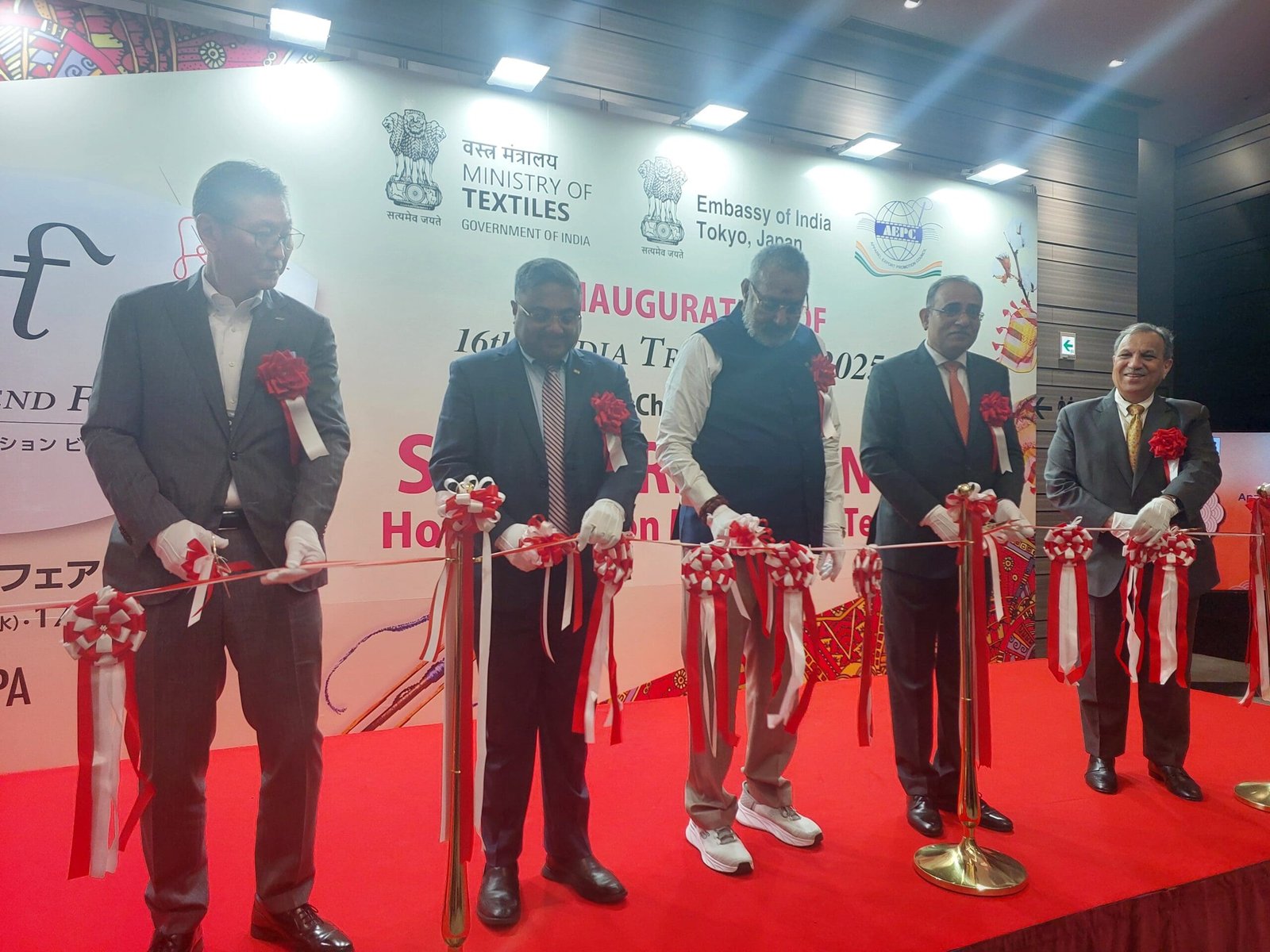
In his keynote address, Textiles Minister Shri Giriraj Singh stated:
“India-Japan textiles trade relations are age old. As announced by the Honorable Prime Minister, this is the year of technology, science and design. I have spoken to various stakeholders from the apparel and textiles sector under the Prime Minister’s Shri Modi government end-to-end policy that has been in place for the apparel and textiles sector. The ecosystem like 7 PM MITRA Park with an area encompassing 1000 to 2000 acres of each unit, where the expected investment is of 1 lakh crore, creating almost 12 lakh jobs. The Japanese investors who will go, will get all facilities including benefits of the state government various subsidies—like labour and electricity subsidy, etc.”
He further emphasized the synergy between India’s quality standards and Japan’s expectations:“ Recently Japan has imported 5000 cars from India which is testimony in itself of the Indian quality standards are at par with the Japanese standards. We have sustainable fibre and sustainable work force which can be leveraged to boost exports.”
Ambassador Sibi George noted the momentum in bilateral economic ties:
“India is a rapidly growing economy with an annual growth rate of 6% and huge domestic demand and is expected to remain strong. Every day we have good news of growing India – Japan economic ties despite global chain slowdown.”
He also highlighted the cultural alignment in quality: “It is time to partner with Japanese buyers. Japanese consumers are known for their quality, attention to details and refined aesthetics; values that resonate deeply with India’s Textiles recourse.”
Speaking to the strengths of India’s textile landscape, Shri Rohit Kansal, Additional Secretary, Ministry of Textiles, said:“The Indian Textile Sector presents tremendous opportunities. Its end-to-end value chain capabilities, large domestic market, strong export footprint and capacity to manufacture sustainable and at scale are attractive factors for any buyers or investors.”
Shri Sudhir Sekhri, Chairman of AEPC, emphasized India Tex Trend Fair’s pivotal role: “India Tex Trend Fair has emerged as a strategic platform for showcasing the depth, diversity, and innovation of Indian textiles and garments. With participation from over 150 exhibitors, this edition brings an impressive array of collections—from sustainable apparel and high fashion to artisan lifestyle products—designed to resonate with Japanese consumer preferences.”
He further highlighted engagement with top Japanese brands: “Under the leadership of our dynamic textiles Minister Shri Giriraj Singh, we had great meetings with the leading Japanese apparel brands who have shown great interest in India’s apparel sector. We have appealed to increase their sourcing and invest more in India. We had successful meetings with major brands like: Uniqlo, Adastria, Toray, Itokin company, Broque Japan, Daiso along with YKK and Pegasus, etc.”
“We as an industry is committed to meet Japanese quality norms. We invite all our Japanese partners to engage with Indian exhibitors, explore collaborative possibilities, and experience firsthand the strength and reliability of India as a preferred sourcing destination.”
On enhancing trade under CEPA, he added: “Our sincere and deeper engagement with the Japanese market has resulted in greater utilization of India- Japan CEPA. The increase in India’s share in the Japanese market reflects India’s growing overall export competitiveness.”
India’s apparel exporters offer ESG-compliant manufacturing, including solar-powered factories, zero-liquid-discharge systems, and full traceability—backed by sustainable labels such as “Kasturi Cotton.” The ecosystem supports both small batch and bulk orders, aligning well with the demand of Japanese SMEs.
While India exported USD 234.5 million worth of garments to Japan in 2024, Tokyo’s total apparel imports stood at USD 23 billion, with India accounting for just 1% market share. With duty-free trade under CEPA, sustainable credentials, and flexible capacity, India is poised to scale its presence in Japan. However, greater adoption of MMF, quality compliance, and simplified trade norms will be crucial to capture a significant portion of Japan’s USD 20–35 billion apparel market.