
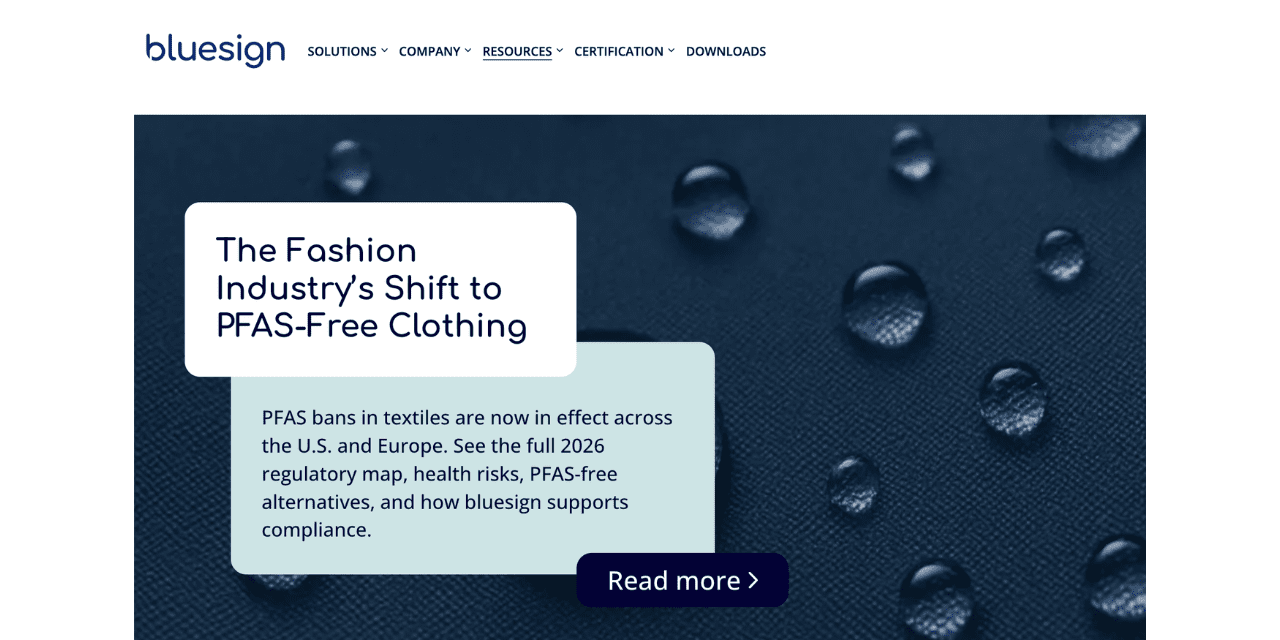
bluesign has released an updated version of its educational resource focused on PFAS in clothing and textiles, responding to growing global concerns surrounding “forever chemicals,” sustainability claims, and stricter regulatory compliance requirements. The revised 2026 guide arrives at a crucial time as apparel brands, manufacturers, and regulators intensify efforts to phase out fluorinated chemistries across textile supply chains.
The updated resource highlights how PFAS (per- and polyfluoroalkyl substances) have historically been used in waterproof outerwear, stain-resistant finishes, membranes, activewear, footwear, and performance textiles due to their water, oil, and dirt-repellent properties. However, increasing scientific evidence linking PFAS exposure to environmental pollution and potential health risks has accelerated worldwide regulatory action and industry-wide transition efforts.
bluesign’s latest update outlines the organization’s ongoing PFAS elimination strategy across its network of more than 900 global system partners. The resource also explains the technical and operational challenges textile brands face when replacing PFAS while maintaining product durability, wash performance, and functionality in high-performance apparel categories.
The publication arrives alongside tightening environmental regulations in Europe and the United States, including new restrictions on PFAS-containing textile products and stricter rules governing environmental marketing claims. The European Union’s Empowering Consumers for the Green Transition Directive (ECGT) is expected to further increase pressure on brands to provide transparent, evidence-based sustainability claims supported by verified data and third-party validation.
According to bluesign, the industry is moving away from broad sustainability messaging toward more scientifically substantiated communication backed by traceable supply chain data. The updated guide emphasizes that verified chemical management systems and transparent sourcing practices are becoming increasingly important for maintaining consumer trust and ensuring compliance across international markets.
The resource also provides a detailed overview of global PFAS regulations currently impacting the textile and apparel industry. In the United States, several states including California, New York, Maine, Vermont, Colorado, and Washington have introduced bans, disclosure requirements, or reporting obligations related to intentionally added PFAS in textile products. Across Europe, regulations under EU REACH, POPs legislation, and national laws in countries such as France and Denmark are accelerating restrictions on fluorinated chemistries.
bluesign explains that textile manufacturers are facing multiple challenges during the transition away from PFAS, including maintaining water repellency, ensuring wash durability, navigating varying international regulations, and improving supply chain transparency. To support this transition, the organization highlights several emerging PFAS-free alternatives including polyurethane-based coatings, polyacrylates, plant-based waxes, paraffin treatments, and silicone-based repellents.
The company also detailed the progress of its long-term PFAS phase-out roadmap. bluesign first restricted long-chain PFAS chemistries in 2015, followed by progressively stricter measures over the past decade. By January 2026, PFAS have now been fully restricted across all bluesign® APPROVED materials and consumer products, except for limited essential-use exemptions.
Several global brands partnered with bluesign, including Patagonia, Adidas, The North Face, Everlane, Jack Wolfskin, and Deuter, are already transitioning toward fluorine-free waterproofing technologies and bio-based alternatives for performance apparel and outdoor products.
The updated resource further emphasizes the importance of chemical input management at the manufacturing stage rather than relying solely on finished product testing. bluesign states that proactive management of textile chemistry, combined with verified supply chain data, is essential for helping brands adapt to evolving regulations while balancing sustainability, safety, and product performance.
As governments continue expanding PFAS restrictions and consumers increasingly demand safer textile products, the fashion and outdoor industries are expected to accelerate investments in alternative chemistries, traceability systems, and verified sustainability communication strategies in the years ahead.