
Vietnam is intensifying efforts to sustain export growth during the second half of 2026, with policymakers and industry leaders focusing on improving supply chain competitiveness, expanding market access and increasing domestic value addition.
Although the country recorded encouraging export performance in the first half of the year, experts noted that exports remain concentrated in a limited number of markets and product categories. Many export industries also continue to rely heavily on imported raw materials and components, limiting domestic value creation.
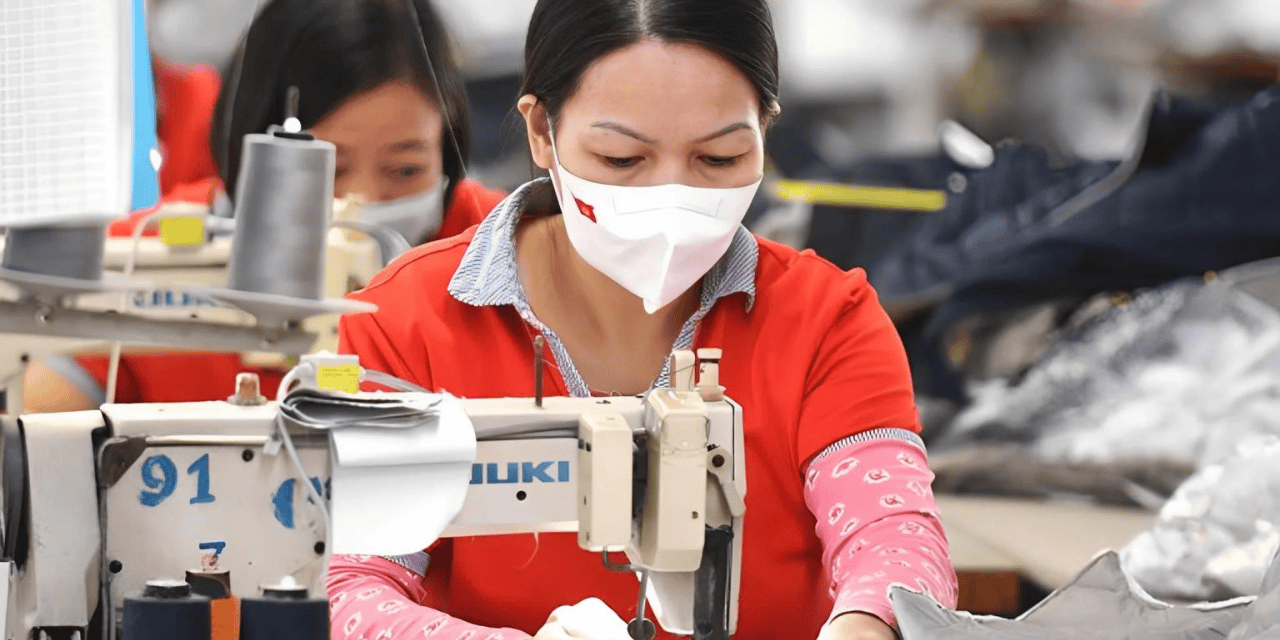
The textile and garment industry remained one of Vietnam’s key export sectors, generating nearly USD 19 billion in export turnover during the first half of 2026. However, manufacturers are facing rising costs for raw materials, logistics and regulatory compliance, while global competition is increasingly driven by supply chain transparency, faster delivery and compliance with environmental, social and governance (ESG) standards.
According to Truong Van Cam, Vice Chairman and General Secretary of the Vietnam Textile and Apparel Association (VITAS), imported materials account for 60–70% of the industry’s total input requirements. This dependence continues to limit Vietnam’s ability to fully benefit from free trade agreements such as the EU-Vietnam Free Trade Agreement (EVFTA) and the Comprehensive and Progressive Agreement for Trans-Pacific Partnership (CPTPP).
Since the beginning of the year, the textile sector has imported more than USD 13 billion worth of raw materials, including USD 5.53 billion of fabric sourced from China.
Nguyen Thu Oanh, Head of the Service and Price Statistics Department under the Ministry of Finance’s National Statistics Office, said exports remained a bright spot despite weak global demand. However, she cautioned that slowing consumption in key markets, declining commodity prices, increasing trade barriers and persistently high global interest rates could continue to affect export performance during the remainder of the year.
To maintain export momentum, the Ministry of Industry and Trade has outlined several priorities for the second half of 2026. These include helping businesses maximise the benefits of existing free trade agreements, particularly opportunities arising from the recently concluded negotiations for a free trade agreement with the European Free Trade Association (EFTA).
The ministry also plans to strengthen trade promotion activities, remove market access barriers, tighten inspections against trade and origin fraud, and enhance verification of certificates of origin to reduce exposure to trade remedy investigations.
In addition, authorities intend to closely monitor international commodity markets to better manage imports of energy and fuel, helping contain import costs by avoiding purchases during periods of peak global prices.
Vietnam recorded a trade deficit of USD 16.65 billion during the first half of 2026, compared with a USD 7.95 billion surplus in the same period last year. However, Tran Thanh Hai, Deputy Director of the Ministry’s Agency of Foreign Trade, said the increase was largely due to higher imports of machinery, equipment, electronics, computers and production materials that are expected to strengthen future manufacturing capacity and export performance.
Improving logistics efficiency has also emerged as a priority as Vietnam’s total trade value has surpassed USD 900 billion. The Vietnam Logistics Business Association (VLA) has called for stronger government support to help domestic shipping companies expand their fleets and operate international routes directly, reducing reliance on foreign shipping lines.
Industry experts believe exports will continue to play a central role in Vietnam’s economic growth as manufacturing, agriculture and seafood orders recover. At the same time, they emphasised the need to diversify export markets, increase domestic value addition, improve logistics capabilities and prepare for stricter technical standards and trade defence measures to ensure long-term export competitiveness.