
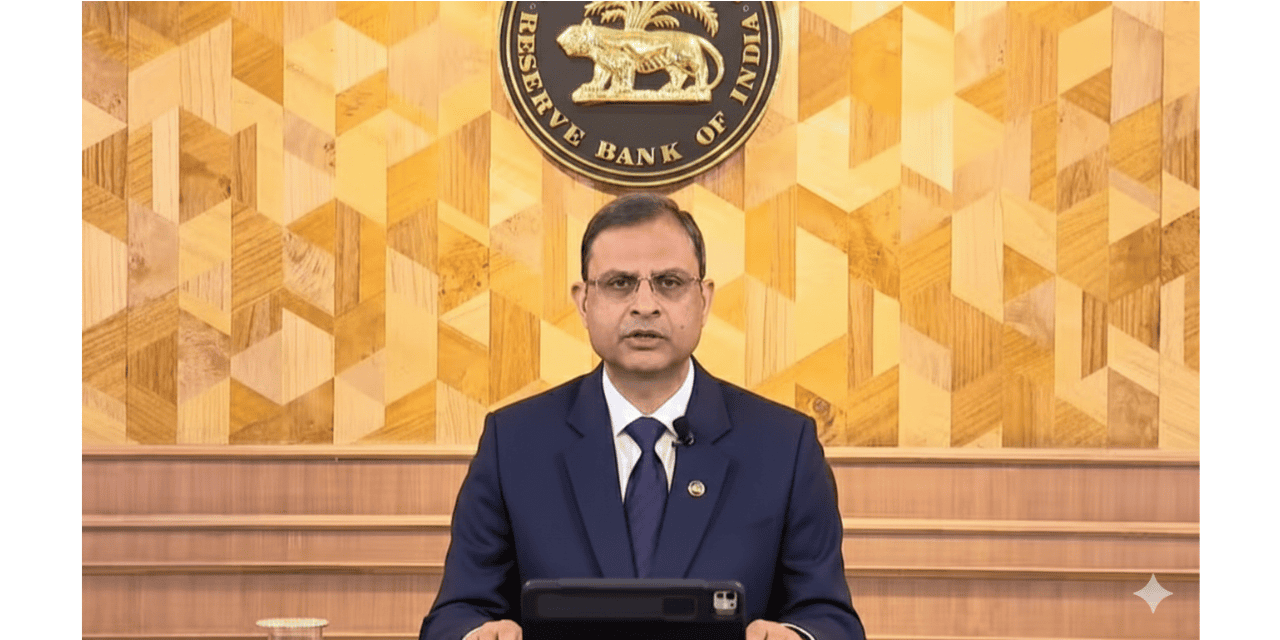
The Reserve Bank of India (RBI) has kept the repo rate unchanged at 5.25%, maintaining policy stability amid continuing global geopolitical uncertainties and evolving economic conditions.
Industry leaders from the real estate and MSME sectors have welcomed the decision, noting that a stable interest rate environment can strengthen business confidence, keep borrowing costs predictable and support housing demand.
Market participants believe the unchanged policy rate will provide greater certainty to businesses planning long-term investments while supporting homebuyers, particularly first-time purchasers, who continue to benefit from competitive home loan rates offered by commercial banks.
Stable Rates Support Housing Demand
Jash Panchamia, Executive Director, Jaypee Infratech Limited, said, “The RBI’s decision to keep the repo rate unchanged at 5.25% reinforces stability and predictability in the housing market. Attractive home loan rates already being offered by commercial banks have significantly improved affordability, encouraging first-time homebuyers to take purchase decisions with greater confidence.”
The real estate sector has increasingly benefited from improved housing affordability and stable financing conditions. Industry stakeholders expect policy continuity to support buyer sentiment and provide greater visibility for developers and investors.
Pradeep Aggarwal, Founder and Chairman, Signature Global (India) Ltd., said, “The RBI’s decision to maintain the repo rate at 5.25% reflects a prudent and balanced approach at a time when the global economy continues to face geopolitical uncertainties and external headwinds. With inflation remaining within the central bank’s comfort range, policy stability provides much-needed confidence to both businesses and homebuyers.”
Vikas Bhasin, Managing Director, Saya Group, said, “A stable interest rate environment is positive for the real estate sector as it provides confidence and certainty to prospective homebuyers planning to finance their purchase through a home loan.”
Predictability for Growth-Stage MSMEs
The RBI’s decision is also expected to provide greater certainty to small and medium enterprises as they plan investments, expansion and capital requirements.
Shrikant Goyal, Co-Founder, Getfive, an integrated capital raising platform for growth-stage MSMEs, said, “The RBI’s decision to maintain the repo rate at 5.25% underscores a stabilizing domestic economic landscape amid global energy and geopolitical uncertainties. For Indian small and medium enterprises (SMEs), this steady stance provides much-needed predictability for long-term capital structuring. As businesses look to scale, stable borrowing costs will serve as a strong foundation. At GetFive, we view this neutral stance as an opportune window for growth-focused companies to optimize their capital structures and strengthen their fundamentals.”
For growth-stage businesses, predictable financing conditions can help companies plan capital allocation, manage funding costs and pursue expansion with greater confidence.
Home Loan Rates Remain Supportive
The unchanged repo rate also comes as retail borrowers continue to benefit from relatively attractive lending rates compared with levels seen in previous years.
Raoul Kapoor, Co-CEO, Andromeda Sales and Distribution, said, “The repo rate, which was last reduced to 5.25% in December 2025, has helped bring lending rates to very attractive levels for retail borrowers. As a result, home loan interest rates, which had crossed 9% a couple of years ago, have now softened to around 7%, significantly improving housing affordability.”
With borrowing conditions remaining stable, industry leaders believe the latest RBI decision could help sustain demand across residential real estate while providing businesses with greater clarity for financial planning.
Overall, the policy decision is being viewed as a measure that prioritises stability and predictability amid global uncertainties. For the real estate and MSME sectors, the continuation of a stable interest rate environment is expected to support investment decisions, consumer confidence and the broader growth outlook.