Dr A. Sakthivel highlights cluster-led growth, workforce infrastructure and technology investments to strengthen India’s textile exports
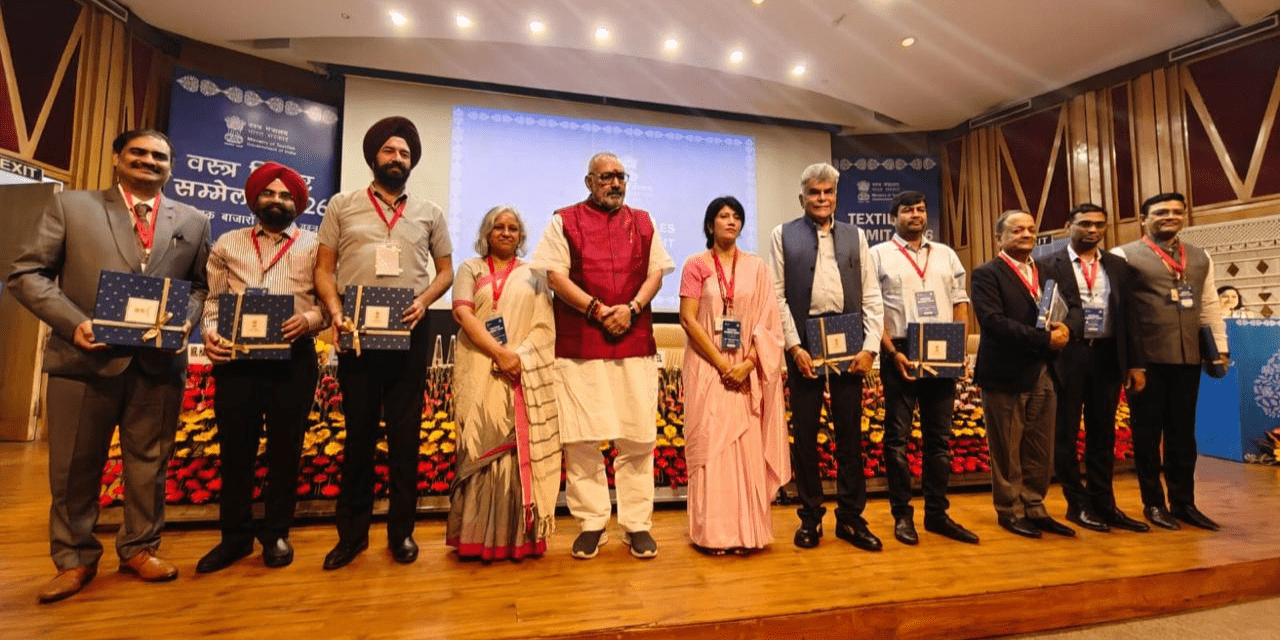
Dr A. Sakthivel, Chairman of the Apparel Export Promotion Council (AEPC), represented the Indian apparel export industry at the Textile Summit 2026, organised by the Ministry of Textiles, Government of India, under the theme “Textiles for Global Markets.”
The summit brought together policymakers, industry leaders, experts, state government representatives and stakeholders from across the textile value chain to discuss strategies for achieving the Government’s Vision 2030 for the textile sector, including the target of building a USD 350 billion textile ecosystem with USD 100 billion in exports by 2030.
Focus on District and Cluster-Led Export Growth
Dr Sakthivel participated in the session titled “District & Cluster-Led Export Strategy,” which explored ways to transform districts into export growth centres through stronger collaboration, improved execution and ecosystem development.
Discussions during the session focused on strengthening district and cluster-based manufacturing ecosystems, improving infrastructure and logistics, enhancing access to finance and developing future-ready skills to support India’s textile export objectives.
Addressing the gathering in the presence of Union Minister of Textiles Shri Giriraj Singh and Secretary, Ministry of Textiles, Smt Neelam Shami Rao, Dr Sakthivel highlighted the contribution of apparel and textile clusters to employment generation, exports and regional economic development.
Call for MMF Partnerships and Technology Transfer
Highlighting the increasing importance of Man-Made Fibre (MMF) products in global trade, Dr Sakthivel advocated joint ventures and technology partnerships with Taiwan to strengthen India’s MMF ecosystem.
He said such collaborations would enhance manufacturing capabilities, facilitate technology transfer and improve the competitiveness of India’s textile industry in international markets.
Workforce Infrastructure and Technology Upgradation
To address workforce requirements, Dr Sakthivel proposed the development of modern hostel facilities for workers in major textile and apparel manufacturing clusters. According to him, such infrastructure would improve worker welfare, support labour mobility and help address manpower challenges across the sector.
He also called for the establishment of a dedicated fund for technology upgradation to encourage investments in advanced manufacturing systems, automation, digitalisation and AI-enabled technologies. He emphasised that technology adoption would be critical for improving productivity, quality and sustainability throughout the textile value chain.
Support for MSMEs and Tiruppur Cluster
Dr Sakthivel urged the Government to reduce the minimum investment threshold under relevant support schemes to ₹25 crore, enabling greater participation by MSMEs, which constitute a significant part of India’s textile and apparel industry.
He also sought special policy support for the Tiruppur knitwear cluster, including consideration of a dedicated PM MITRA Park for the region. He noted Tiruppur’s contribution to India’s apparel exports and its potential role in supporting the country’s export growth targets.
Vision for India’s Textile Industry
The summit also examined issues including product and design enhancement, value addition, quality and sustainability standards, utilisation of Free Trade Agreements (FTAs), market diversification and strengthening India’s participation in global textile and apparel value chains.
Presentations during the summit highlighted that India’s textile sector contributes 2.3 per cent to the country’s GDP, accounts for 10 per cent of manufacturing output, employs nearly 50 million people, and exports to more than 190 countries.
Reaffirming AEPC’s commitment to the Government’s Vision 2030, Dr Sakthivel stated that investments in technology, workforce infrastructure, cluster development and export-oriented manufacturing would play an important role in achieving the target of USD 100 billion in textile and apparel exports by 2030.
The summit concluded with discussions aimed at strengthening collaboration between the Central Government, State Governments and industry stakeholders to enhance India’s position as a global sourcing destination for textiles and apparel.