
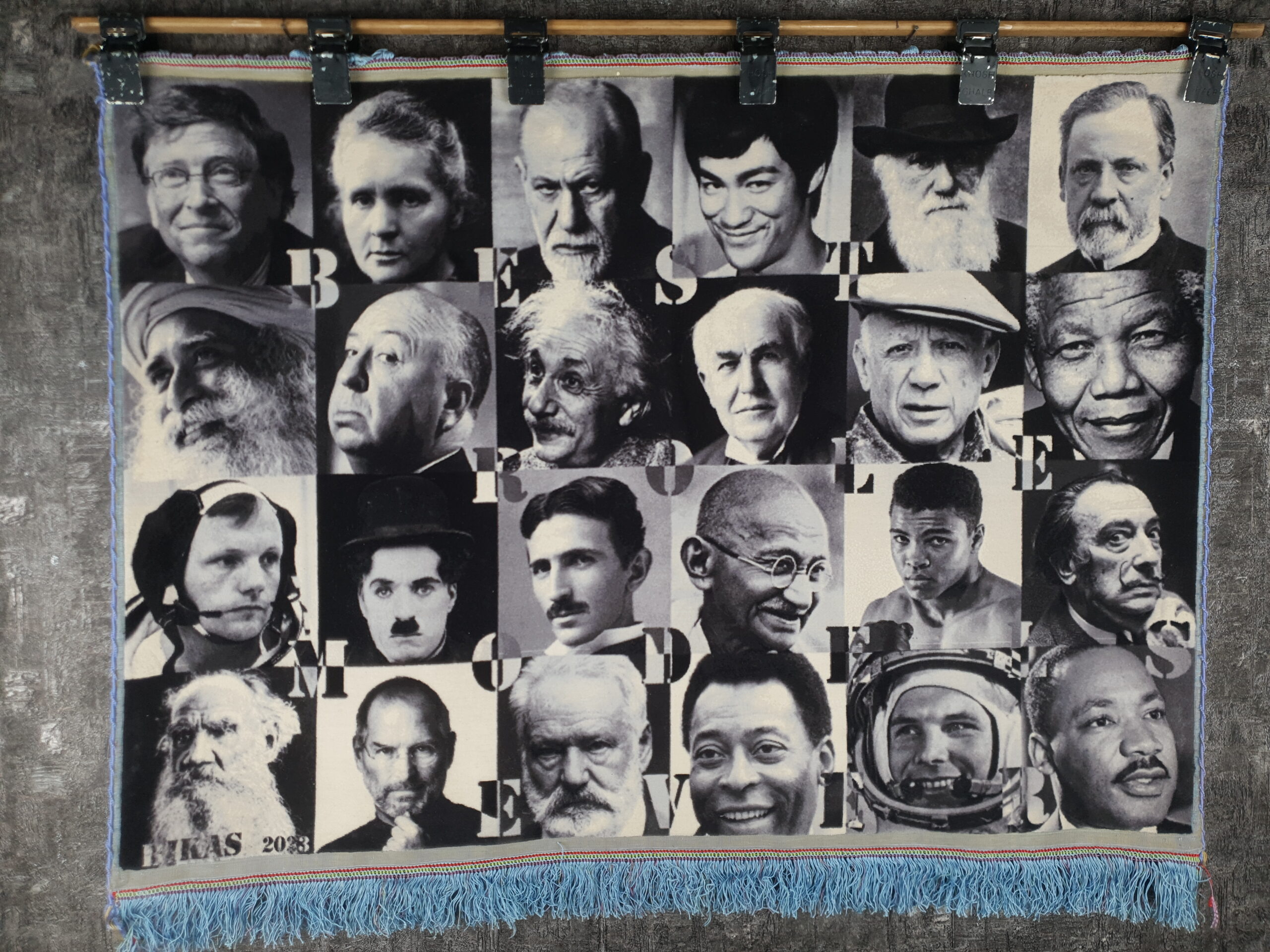
Artist Daniel Bikas has created Best Role Models Ever, a Persian wall rug featuring portraits of 24 internationally recognised figures.
The artwork explores how societies choose people to remember, admire and follow. It also examines how ideas of excellence change across different cultures and generations.
24 Figures Represent Different Forms of Excellence
The Best Role Models Ever rug brings together people from different fields. These include science, art, sport, literature, technology and other areas of public life.
The selection highlights the many ways individuals can influence society. Achievement is not limited to one profession or type of talent.
The artwork therefore presents role models as examples of different human possibilities. Their influence can come from knowledge, creativity, courage, perseverance or other qualities.
Persian Rug Becomes a Form of Memory
Bikas uses the traditional Persian rug as the foundation for the work. The portraits turn the textile into a visual record of influential people.
The black-and-white treatment gives the composition an archival character. It places attention on the faces and identities of the people shown.
At the same time, the woven format connects contemporary portraiture with traditional textile craft.
The Meaning Behind the Portraits
The artwork also questions the idea of a perfect role model.
Public figures are often remembered through selected parts of their lives. Their achievements may become more visible than their limitations or contradictions.
By placing 24 portraits together, Best Role Models Ever asks viewers to consider what connects these individuals.
The answer is not simply fame. Their common link is influence and the lasting impact of their work.
A Question About Who We Remember
The title Best Role Models Ever also invites discussion. Different viewers may have different ideas about who deserves to be included.
Some may value scientific discovery. Others may focus on courage, creativity, social influence or perseverance.
Through the Persian wall rug, Daniel Bikas connects art, textile tradition and collective memory. The work ultimately asks a wider question: What qualities should future generations remember and admire?