
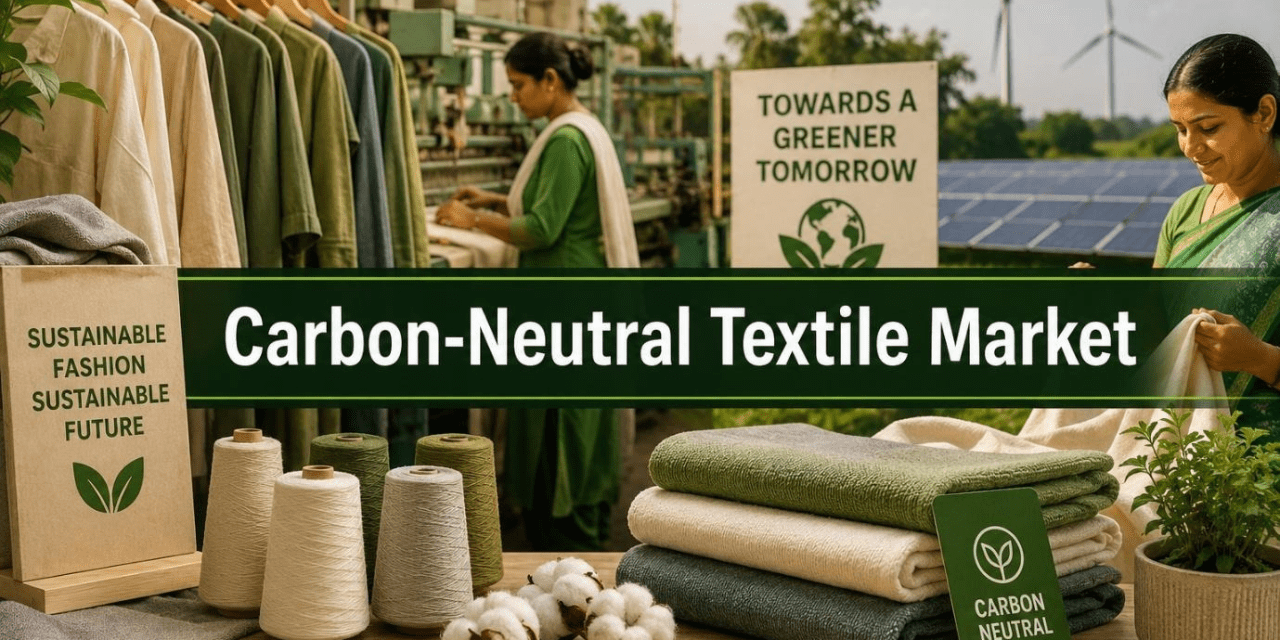
Growing Demand for Sustainable Textiles Drives Market Expansion Worldwide
The global carbon-neutral textile market is projected to witness significant growth over the coming years, driven by rising environmental awareness, stricter sustainability regulations, and increasing demand for eco-friendly products across the textile value chain.
According to the Growth Market Report, the global carbon-neutral textile market was valued at USD 8.7 billion in 2024. The market is expected to expand at a compound annual growth rate (CAGR) of 11.3% between 2025 and 2033, reaching an estimated value of USD 25.3 billion by 2033.
The market’s growth is being supported by consumer demand for sustainable fashion, government initiatives aimed at reducing carbon emissions, and the adoption of environmentally responsible manufacturing technologies.
Understanding the Carbon-Neutral Textile Market
The carbon-neutral textile market encompasses textiles and fabrics produced through processes designed to reduce, minimize, or offset carbon emissions generated throughout their lifecycle. Manufacturers are increasingly focusing on lowering environmental impact while maintaining product quality and operational efficiency.
As sustainability becomes a key priority for businesses and consumers, textile manufacturers are integrating carbon reduction strategies into sourcing, production, logistics, and waste management practices.
Importance of Sustainable Textile Production
The textile industry has historically been associated with high levels of energy consumption, water usage, chemical processing, and transportation-related emissions. Growing environmental concerns and evolving regulatory frameworks are prompting manufacturers to adopt cleaner production methods.
Carbon-neutral textile production offers several potential benefits, including:
- Lower greenhouse gas emissions
- Reduced environmental pollution
- Improved resource efficiency
- Enhanced brand reputation
- Increased export opportunities
- Greater consumer confidence
- Support for long-term sustainability objectives
These factors are encouraging companies to invest in sustainable technologies and practices.
How Carbon-Neutral Manufacturing Works
Carbon-neutral textile production involves reducing emissions at multiple stages of the manufacturing process.
Sustainable Raw Materials
Manufacturers are increasingly using alternative fibers and materials with lower environmental footprints, including:
- Organic cotton
- Hemp fibers
- Recycled polyester
- Bamboo-based textiles
- Regenerative agriculture fibers
These materials help reduce pressure on natural resources and support sustainable agricultural practices.
Renewable Energy Integration
Energy consumption remains one of the largest contributors to carbon emissions in textile production. To address this challenge, companies are adopting renewable energy sources such as:
- Solar power
- Wind energy
- Biomass systems
- Hybrid renewable energy solutions
The transition to cleaner energy sources helps reduce dependence on conventional fossil fuels.
Efficient Production Technologies
Advancements in manufacturing technology are improving resource efficiency and reducing waste. Key innovations include:
- Smart manufacturing systems
- Artificial intelligence-based monitoring
- Water recycling technologies
- Low-impact dyeing processes
- Energy-efficient machinery
These solutions help optimize production while lowering environmental impact.
India’s Growing Role in Carbon-Neutral Textiles
India is emerging as a significant contributor to the carbon-neutral textile sector due to its strong manufacturing base and expanding sustainability initiatives.
Several factors are supporting India’s position:
- A well-established textile manufacturing ecosystem
- Growing international demand for sustainable sourcing
- Expansion of renewable energy infrastructure
- Increased focus on green industrial development
- Policy support for environmentally responsible manufacturing
The country’s textile sector continues to play a major role in employment generation and export growth, creating opportunities for wider adoption of sustainable production methods.
Technology Driving Market Growth
Modern technologies are playing a critical role in advancing carbon-neutral textile manufacturing.
Artificial Intelligence
AI applications are helping manufacturers:
- Predict maintenance requirements
- Optimize energy consumption
- Reduce raw material waste
- Improve production efficiency
Digital Textile Printing
Digital printing technologies offer advantages such as:
- Reduced water consumption
- Lower chemical usage
- Improved production accuracy
Blockchain-Based Traceability
Blockchain systems are being used to:
- Verify sustainability claims
- Track raw material sourcing
- Improve supply chain transparency
- Strengthen consumer trust
Challenges Facing the Market
Despite strong growth prospects, several challenges remain.
High Initial Investment
The adoption of sustainable technologies often requires substantial capital expenditure, particularly for smaller manufacturers.
Complex Supply Chains
Tracking carbon emissions across multiple suppliers and production stages remains a challenge for many textile companies.
Consumer Awareness
While sustainability awareness is increasing, purchasing decisions are still often influenced by factors such as price and design.
Technology Adoption
Infrastructure limitations and technical expertise requirements can slow the implementation of advanced sustainability solutions.
Key Industry Participants
The competitive landscape includes several global and regional players actively investing in sustainable textile solutions. Major companies operating in the market include:
Lenzing AG, Toray Industries Inc., DuPont de Nemours Inc., Teijin Limited, Indorama Ventures Public Company Limited, Birla Cellulose (Aditya Birla Group), BASF SE, Unifi Inc., Far Eastern New Century Corporation, Covestro AG, Eastman Chemical Company, HeiQ Materials AG, Sateri Holdings Limited, Grasim Industries Limited, Shandong Ruyi Technology Group Co. Ltd., W. L. Gore & Associates Inc., Tencel (Austrian Lenzing Group), Patagonia Inc., Nike Inc., and Arvind Limited.
Outlook
As sustainability becomes increasingly important across global supply chains, the carbon-neutral textile market is expected to continue its expansion. Growing investment in renewable energy, sustainable materials, digital technologies, and responsible manufacturing practices is likely to shape the future of the textile industry over the coming decade.