Contemporary Handloom Beyond Nostalgia: Building Relevance for a New Generation
By Pranjali Kharche, Founder, The Mirari Life
Indian handloom has long been celebrated as a symbol of heritage and craftsmanship. Yet, according to Pranjali Kharche, Founder of The Mirari Life, its future depends not on preserving tradition alone but on making it relevant for today’s consumers through innovation, thoughtful design and stronger value perception.
She believes handloom does not need to imitate industrial textiles or reinvent itself to stay relevant. Instead, consumers must better understand the qualities that make genuine handwoven fabrics unique—from their breathability and softness to the skilled craftsmanship that no powerloom can replicate.
Beyond Surface-Level Similarity
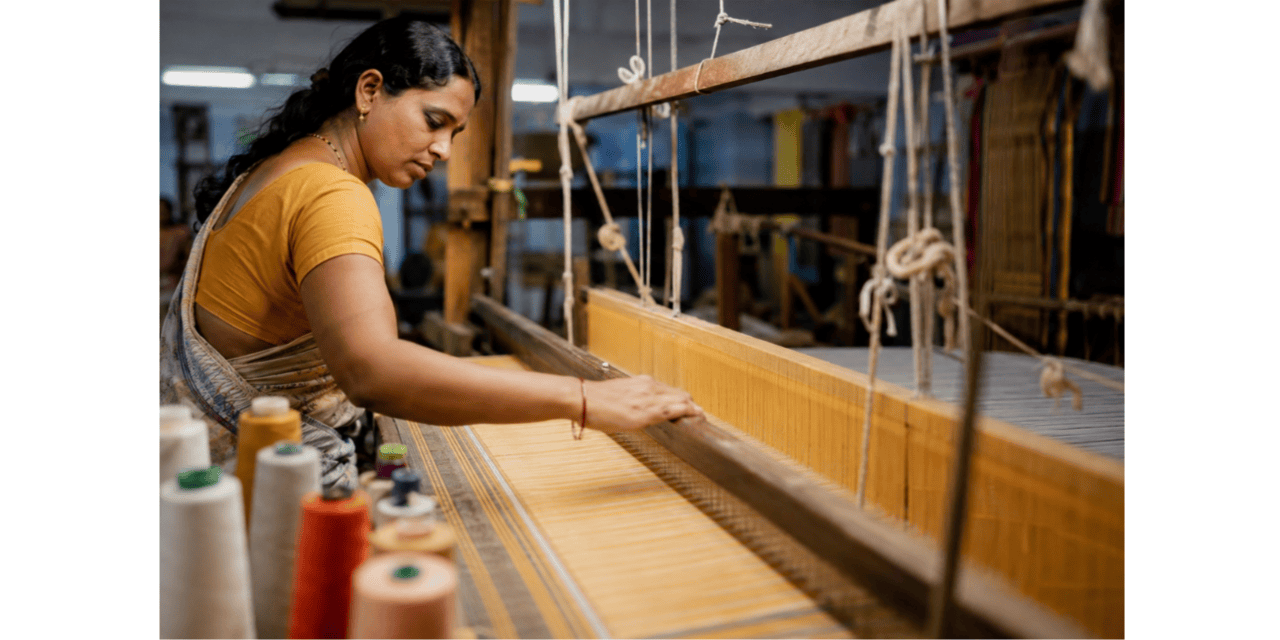
A common misconception in the textile industry is that powerloom fabrics can recreate the feel of handloom simply by adding slubs or using different yarns. Kharche argues that the true character of handloom comes from the weaving process itself, where every yarn is individually placed and tensioned by skilled artisans.
This human intervention creates a fabric with distinct movement, texture and comfort that machines cannot reproduce.
Despite this, handloom continues to face a perception challenge. Because it is produced in rural communities, many consumers expect handcrafted textiles to be inexpensive. Products priced above ₹2,000 or ₹3,000 are often viewed as expensive, even though every stage of production is completed manually.
According to Kharche, the issue is less about pricing and more about educating consumers on the craftsmanship and value embedded in every piece.
Making Handloom Contemporary
For Kharche, contemporary handloom is not about abandoning tradition but expanding its creative possibilities.
Rather than limiting designs to historical motifs, today’s handloom can embrace modern aesthetics while retaining authentic weaving techniques. At The Mirari Life, this philosophy has led to collections featuring linen with wine-glass motifs and sarees decorated with dragonflies—designs that appeal to younger consumers while respecting traditional craftsmanship.
She believes handloom should become an everyday wardrobe choice rather than being reserved only for festivals or cultural occasions. Modern silhouettes, lighter fabrics and versatile styling can help integrate handloom naturally into contemporary lifestyles.
Aspiration Extends Beyond Luxury
One of Kharche’s key observations is that consumers increasingly aspire to own products with genuine quality and craftsmanship, even if they belong to a premium segment.
Rather than seeking the lowest price, many customers are willing to invest in textiles that offer exceptional fabric quality, refined finishing and meaningful stories.
She believes the handloom sector should focus less on making products cheaper and more on clearly communicating why handcrafted textiles deserve their value.
Challenges of Building from a Smaller City
The Mirari Life was established in Akola, Maharashtra, where Kharche found the advantage of lower operating costs and close personal support.
However, she notes that building a textile business outside India’s major metropolitan cities presents significant operational challenges.
Transport delays often affect production schedules, while recruiting skilled technical talent remains difficult. Improved logistics, affordable freight services and better export infrastructure would enable more regional textile businesses to scale without relocating to larger cities.
Industry Platforms Must Create Meaningful Connections
Participation in Indie Haat Delhi 2026 provided valuable market insights beyond product visibility.
The event enabled the brand to understand customer preferences, interact with buyers and build relationships with fellow entrepreneurs and industry stakeholders.
Kharche also highlighted the importance of engaging with policymakers, including Shri Giriraj Singh, Hon’ble Minister of Textiles; Neelam Shami Rao, IAS, Secretary, Ministry of Textiles; Tanu Kashyap, IAS, Director General, NIFT; and Dr. M. Beena, IAS, Development Commissioner for Handlooms.
She believes such platforms should be evaluated not only by visitor numbers but by the quality of market intelligence, networking opportunities and long-term collaborations they facilitate.
Ensuring Better Value for Artisans
Ultimately, Kharche emphasises that the future of handloom depends on creating greater economic value for artisans.
Fair compensation, stronger export opportunities and wider recognition of India’s textile craftsmanship can help sustain weaving as a respected and economically viable profession.
Rather than preserving handloom solely as a cultural tradition, she advocates creating conditions where weaving continues to evolve alongside changing consumer expectations.
Through better design, stronger market access, improved logistics and greater appreciation of handcrafted textiles, Indian handloom can move beyond nostalgia and establish itself as a confident, contemporary choice for future generations.