
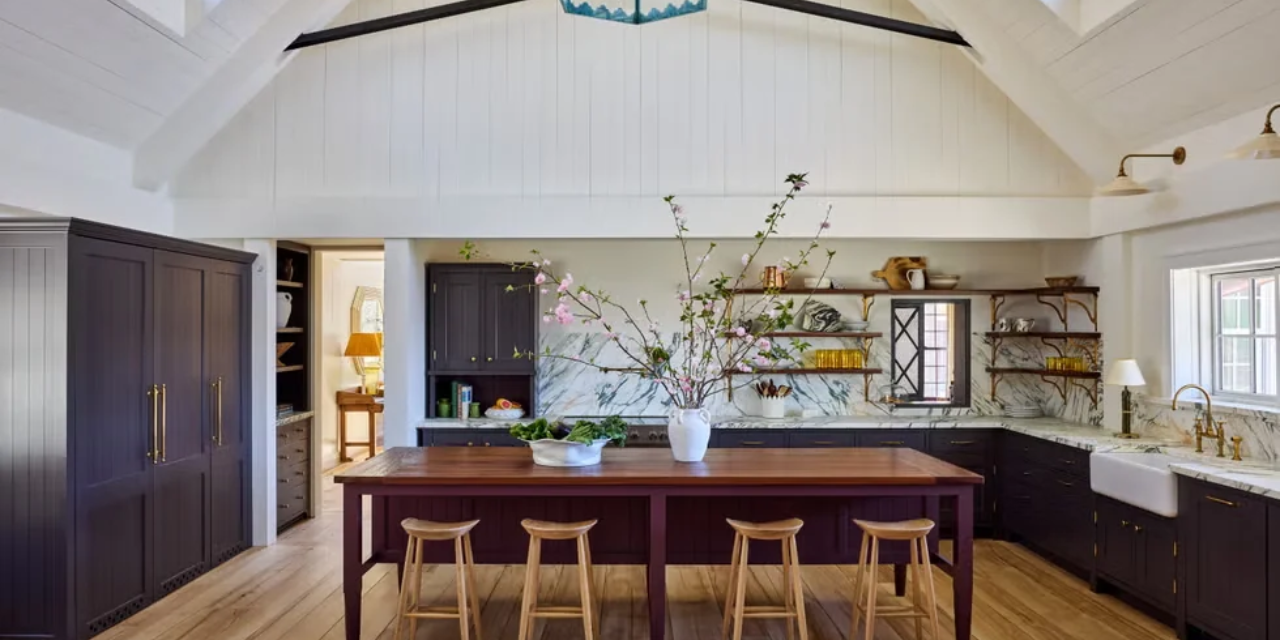
Cook’s tables are emerging as a popular alternative to oversized kitchen islands, bringing flexibility, warmth and character to modern kitchens. As homeowners move towards more relaxed and functional interiors, these freestanding furniture pieces are gaining attention for their practical design and traditional appeal.
According to design experts featured in House Beautiful, cook’s tables offer a lighter alternative to built-in islands. Their compact structures and movable designs make them suitable for different kitchen layouts, particularly smaller spaces.
Cook’s Tables Create Relaxed Kitchen Spaces
Traditional kitchen islands can dominate a room because of their size and built-in storage. In contrast, cook’s tables create a more open and approachable atmosphere.
Designers highlight the growing importance of kitchens as spaces for family gatherings, entertaining and everyday activities. Cook’s tables support this approach by combining food preparation, casual dining and social interaction in one place.
Their furniture-inspired appearance also introduces personality and timeless appeal to contemporary kitchens.
A Practical Choice for Small Kitchens
Cook’s tables can work particularly well in compact kitchens and galley-style layouts. Their narrower structures occupy less visual and physical space, helping rooms feel more open.
However, larger kitchens can also benefit from these designs. A vintage or custom-made table can become a central feature while storage and appliances remain positioned along the surrounding cabinetry.
Designers recommend maintaining around four to five feet of clearance around a central cook’s table for comfortable movement. Homeowners with limited floor space can also consider extending their cabinetry with a table-style peninsula.
Flexible Furniture for Everyday Use
One major advantage of cook’s tables is their flexibility. Unlike fixed kitchen islands, freestanding tables can be moved or repositioned according to changing requirements.
They provide additional preparation space during everyday cooking and can support larger gatherings or holiday entertaining. Adding casters can make a table easier to move between preparation and dining activities.
How to Choose the Right Cook’s Table
Choosing the right cook’s table involves considering its size, height, material and shape.
Size and height: The table should suit the kitchen layout while leaving sufficient walking space. Some vintage tables sit lower than standard kitchen counters, so casters or leg extensions may improve their suitability for food preparation.
Natural materials: Oak, maple and walnut are popular choices because of their durability and natural character. Reclaimed wood introduces a rustic appearance, while metal and butcher block surfaces offer alternative finishes.
Coordinated finishes: Matching the table’s wood tones with open shelving, cutting boards and serving accessories can create a cohesive kitchen interior.
Shape and design: Rounded corners and curved silhouettes create a softer, more intimate atmosphere. Rectangular tables, meanwhile, can provide additional preparation and seating space.
Cook’s Tables Bring Character to Modern Kitchens
The growing interest in cook’s tables reflects a wider shift towards kitchens that combine functionality with furniture-inspired design. Natural wood, flexible layouts and traditional detailing are helping create spaces that feel more personal and welcoming.
For homeowners planning kitchen updates in 2027, cook’s tables offer an alternative to bulky islands while providing practical preparation, dining and entertaining space.


