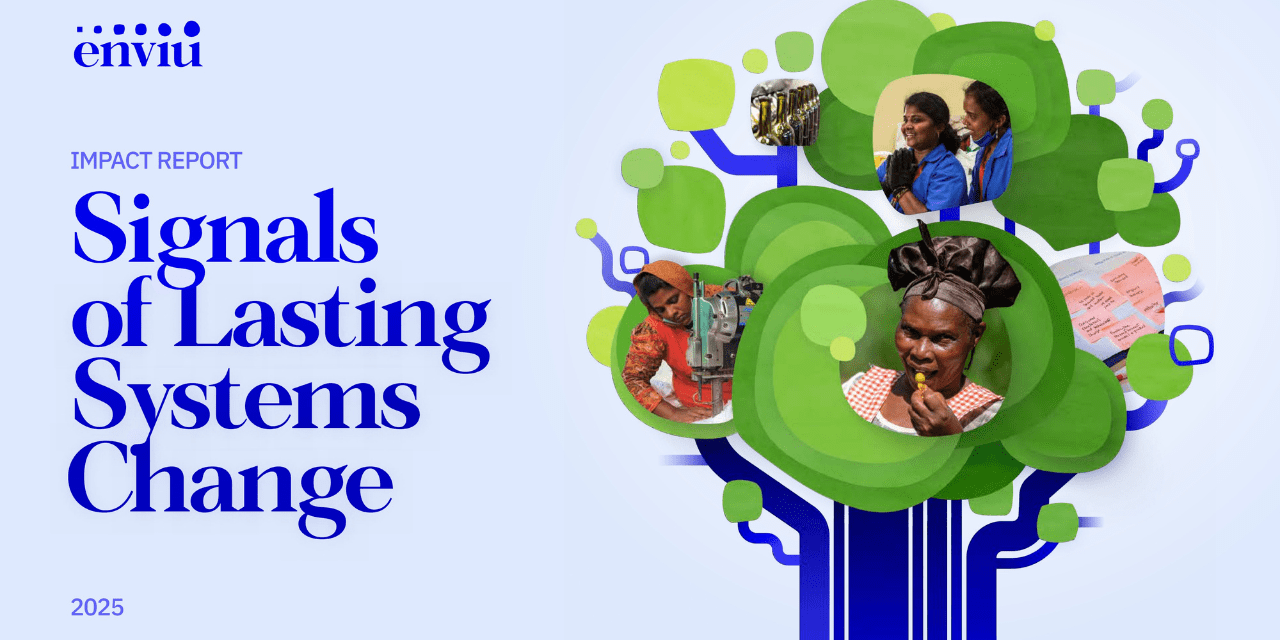
Enviu’s 2025 Impact Report Highlights Growth in Circular Economy and Climate Solutions
Enviu has released its 2025 Impact Report, outlining the performance of its portfolio of impact ventures across agriculture, circular economy, waste reduction, and sustainable livelihoods. The report highlights measurable outcomes in emissions reduction, waste diversion, capital mobilization, and economic opportunities across multiple regions.
According to the report, every euro of catalytic funding invested in Enviu’s agrifood portfolio now mobilises €7.9 in total capital, compared with €5.6 in 2024. Ventures focused on reducing post-harvest food losses have cumulatively generated €7 million in monetised impact through improvements in farmer income, food security, job creation, and environmental outcomes.
Across its portfolio, Enviu’s ventures have cumulatively avoided 202,000 tonnes of CO₂-equivalent emissions and reduced nearly 10.7 million kilograms of waste. Both indicators increased by more than 60% year-on-year. The report also notes a significant rise in women’s participation in farming and the creation of sustainable economic opportunities for more than 1,600 micro-entrepreneurs.
Agrifood Ventures Expand Farmer Support
In Kenya, SokoFresh supported 19,634 farmers and value chain participants in reducing post-harvest food losses while increasing farmer incomes by between 15% and 30%.
Shambani Pro, another Kenyan venture, continued to connect smallholder farmers directly with buyers. Women now represent 55% of all engaged farmers, reflecting an 88% increase year-on-year.
“Shambani Pro pays us fairly based on actual weight, and their prices are better. As a full-time farmer, I rely entirely on farming income, so consistency and fairness are very important to me.”
— Peter Mutinda Muteti, 56, smallholder farmer, Kenya
Circular Textile and Waste Solutions in India
In India, Second Spin continued its efforts to divert institutional textile waste from landfills through partnerships with 77 hotels across 10 cities. The initiative has also expanded to Gurgaon.
Workers employed at partner facility Saahas Zero Waste receive formal salaries benchmarked against city minimum wage levels, along with structured employment opportunities within the textile waste management sector.
Reuse and Packaging Reduction Initiatives in Indonesia
In Indonesia, Alner expanded its customer base by 30% during 2025 while reducing 15.5 tonnes of single-use packaging through a network of 1,470 warungs and micro-retailers.
Enviu also co-founded AGUNI in 2025, Indonesia’s first association focused on making reuse systems a primary solution to plastic pollution. The association brings together government bodies, industry stakeholders, and civil society organisations to develop common standards and support nationwide adoption of reuse systems.
More than 1,000 refill and reuse points are currently active across Indonesia.
In Bali, the Destination Zero Waste initiative achieved a 76.6% reduction in single-use plastics across five hotels within three months. The project has since led to the creation of KemBali, a new venture aimed at expanding the model.
“Our hotel launched its Destination Zero Waste Bali campaign in June, and while results show progress, the real success lies in the active participation of our guests and team members.”
— Dino Anthonio, General Manager, TUI BLUE Berawa
Reusable Packaging Expands in Europe
In the Netherlands, the Herbruikbare Wijnfles initiative introduced the country’s first universal reusable wine bottle system. The program is now active across 81 hospitality and event venues.
The initiative has diverted 39,000 single-use bottles and achieved up to 83% CO₂ reduction per bottle. The concept has also expanded through the EU-funded Interpool cross-border pooling project.
Focus on Systems-Level Change
According to Enviu, the ventures demonstrate that environmental impact and commercial viability can coexist while creating entirely new market systems and infrastructure.
The report also highlights examples of catalytic capital. One cited case is Marine Metals, which reportedly mobilised €8 for every €1 of early-stage funding invested, supporting circular manufacturing and ship recycling initiatives.
Across agriculture, waste management, hospitality, packaging, and textile sectors, Enviu’s portfolio continues to focus on building scalable business models that address environmental and social challenges while generating measurable outcomes.