New aUPS module uses AI and automation to support textile reuse and resale operations
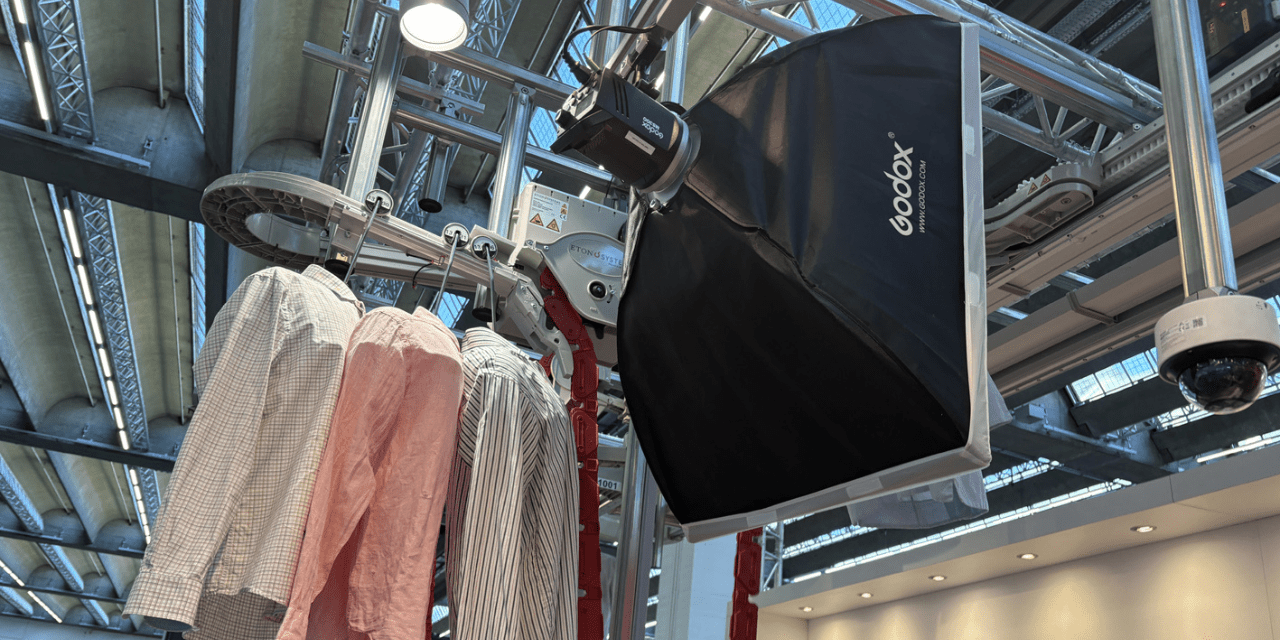
Eton Systems, a member of the TMAS, presented its new AI-driven aUPS sorting module for used garments during the recent Texprocess exhibition in Frankfurt.
The aUPS module is based on Eton’s UPS transport system and integrated with the company’s ETONingenious Factory 4.0 software platform. The system is designed to automate the sorting and assessment of second-hand garments for the growing resale market.
According to the company, the AI-enabled module can identify and grade garments by colour, size, style, and, where possible, manufacturer. The system also analyses garments for visible damage, suggests potential repairs, and calculates estimated resale values.
“The collected information is fed into a calculation model that, based on market data, makes suggestions for a sales price,” explained Sven Sørbo in Frankfurt. “At the same time, the garment is photographed for marketing and then transported to a warehouse to await sale.”
Eton stated that several major retail brands are currently trialling the technology. The aUPS system was developed through the Microfactories System Innovation project in collaboration with specialists from the Swedish School of Textiles, the Automation Region innovation cluster at Mälardalen University, and the iHubs Sweden collaboration platform.
The project builds on previous initiatives focused on small-scale and localised textile production, with current efforts targeting textile reuse and circular business models.
“The online resale segment alone is huge and forecast to double over the next five years and volumes are now so large that handling has to be automated for it to work,” said Ellen Flybäck. “The new EU regulations requiring the separate collection of textiles are without doubt having an impact, but we are also seeing an increasingly positive attitude towards reuse and greater awareness of the textile industry’s environmental footprint.”
“Collaboration with universities and innovation environments helps us to be at the forefront,” added Jan Johansson. “We can participate in freer and more visionary development, without having to take on all the work ourselves. But above all, it is about contributing to a more circular industry, where materials can be used for longer and in a smarter way.”
TMAS Secretary General Therese Premler-Andersson said the development reflects how Swedish textile innovation is expanding beyond production efficiency into reuse, automation, and AI-supported circular value chains.