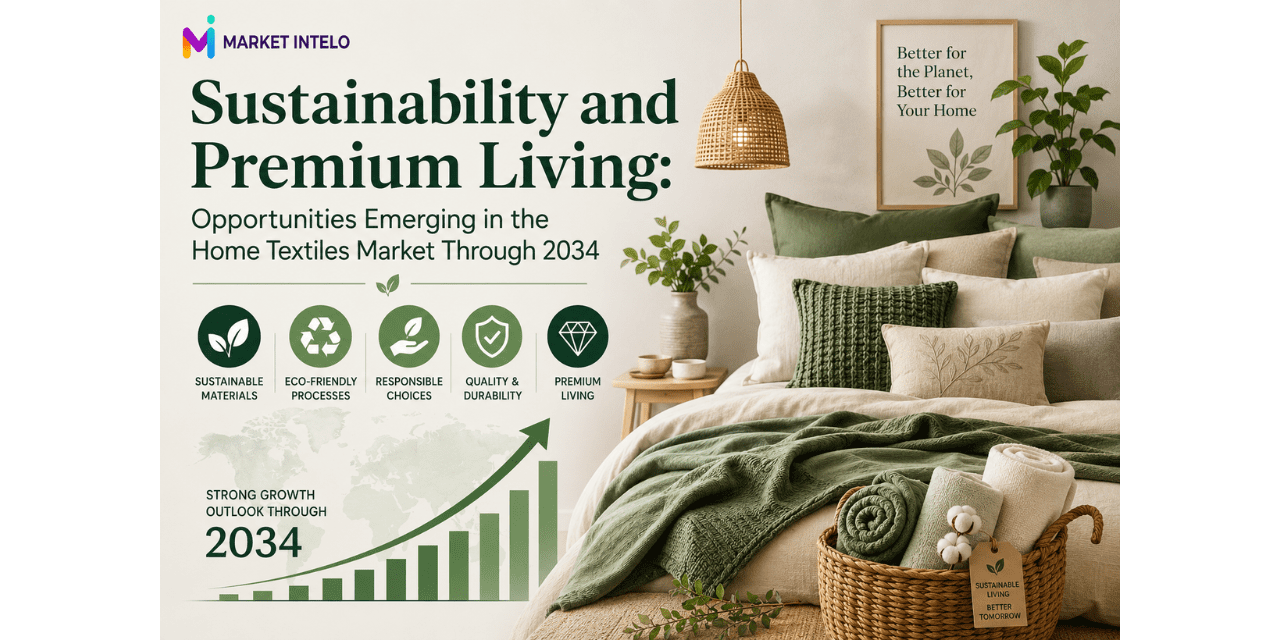
Sustainability and Premium Living Drive Growth in the Global Home Textiles Market Through 2034
The global home textiles industry is poised for steady expansion through 2034, supported by rising consumer demand for premium, sustainable and functional products. Once regarded primarily as essential household items, home textiles are increasingly being viewed as lifestyle products that combine comfort, aesthetics, durability and environmental responsibility.
The market encompasses a wide range of products, including bed linen, towels, curtains, upholstery fabrics, blankets, table linens and decorative textiles. Demand continues to be driven by urbanisation, rising disposable incomes, home renovation activities and growing consumer awareness of sustainable materials.
Market Outlook
According to industry estimates, the global home textiles market was valued at US$41.7 billion in 2025 and is projected to reach US$60.2 billion by 2034, registering a compound annual growth rate (CAGR) of 4.2% between 2026 and 2034.
Other market forecasts indicate higher growth potential, with estimates placing the market at US$132.8 billion in 2025, rising to US$145.29 billion in 2026, US$231.40 billion by 2033, US$244.76 billion by 2034, and US$235.64 billion by 2035, reflecting CAGR projections ranging from 5.9% to 8.55% across different research reports.
The industry is increasingly benefiting from changing consumer preferences, with purchasing decisions shifting beyond utility towards comfort, wellness, premium quality and environmental sustainability.
Sustainability Becomes a Core Growth Driver
Sustainability continues to reshape product development across the home textiles sector. Consumers are increasingly seeking products made from organic cotton, recycled fibres, bamboo, linen, lyocell and other environmentally responsible materials.
Manufacturers are responding by investing in cleaner production technologies, reducing water and energy consumption, improving waste management practices and adopting transparent sourcing strategies. Eco-certifications and sustainability labels are also becoming key purchasing considerations, particularly within premium product categories.
The focus on sustainable manufacturing is expected to remain a major industry trend throughout the forecast period.
Premium Living Influences Consumer Demand
Growing interest in premium lifestyles is encouraging consumers to invest in higher-quality home textile products. Luxury bed linen, designer curtains, premium bath towels and decorative furnishings are increasingly viewed as long-term investments that enhance comfort and interior aesthetics.
High-thread-count bedding, soft-touch towels and sophisticated home décor collections continue to gain popularity as consumers prioritise both design and performance.
The trend is further supported by home décor content across social media platforms, interior design websites and lifestyle publications, which continue to influence purchasing behaviour.
Bedding Leads Product Demand
Bed linen remains one of the largest product categories, supported by repeat purchases, gifting occasions and ongoing demand for improved sleep comfort. Sustainable premium bedding continues to command higher consumer spending.
Bath towels and bath linen also represent an important segment, driven by both residential demand and hospitality requirements. Decorative fabrics, upholstery textiles, curtains and cushions continue to benefit from home renovation and interior design trends.
Blankets, table linens and decorative textiles maintain steady demand through seasonal purchases and gifting occasions.
Asia-Pacific Remains the Fastest Growing Region
Asia-Pacific is expected to remain the fastest-growing regional market, supported by rapid urbanisation, expanding middle-class populations and increasing homeownership rates.
North America continues to present strong opportunities for premium and sustainable home textile brands, with consumers placing greater emphasis on product performance, brand reputation and environmentally responsible manufacturing.
Europe remains an important market for certified sustainable products, reflecting high consumer awareness of environmental issues and demand for responsibly sourced materials.
Digital Retail Expands Market Reach
E-commerce continues to transform the home textiles industry by enabling consumers to compare products, materials, sustainability credentials and pricing more easily.
Digital platforms provide premium and sustainable brands with opportunities to showcase certifications, product quality and brand storytelling while expanding their direct-to-consumer presence.
Despite rapid online growth, physical retail remains important, particularly for products where consumers prefer to evaluate fabric texture and quality before purchasing.
Innovation in Materials and Performance
Material innovation continues to drive product differentiation across the sector. Manufacturers are increasingly incorporating organic cotton, recycled polyester, bamboo fibres and lyocell into their collections to improve both sustainability and product performance.
Functional enhancements such as antibacterial finishes, moisture management, wrinkle resistance, stain protection and temperature regulation are becoming increasingly common, allowing brands to offer greater value and command premium pricing.
Advances in digital printing, efficient dyeing technologies and waste reduction systems are also supporting more sustainable and customised production.
Hospitality Sector Supports Long-Term Demand
Hotels, resorts, serviced apartments and wellness facilities continue to represent significant customers for home textile manufacturers.
The hospitality sector requires durable, visually appealing and easy-to-maintain products that enhance guest experiences while supporting sustainability goals. Premium bedding, luxury bath linen and high-quality curtains remain key procurement categories.
As global tourism continues to expand, hospitality demand is expected to remain an important contributor to industry growth through 2034.
Industry Challenges
Despite favourable growth prospects, manufacturers continue to face several challenges. Sustainable raw materials often involve higher production costs, requiring companies to balance affordability with product quality.
Managing certified supply chains, maintaining traceability and ensuring consistent manufacturing standards also present operational complexities, particularly for smaller brands.
Consumer willingness to pay premium prices for sustainable products varies across regions, making effective communication of environmental benefits increasingly important.
Outlook Through 2034
The home textiles industry is expected to be shaped by the convergence of sustainability, premium living and product innovation over the coming decade.
Brands that successfully combine certified sustainable materials, contemporary design, transparent supply chains and strong digital engagement are likely to strengthen their market position. As consumer expectations continue to evolve, sustainability is becoming an integral product requirement rather than a market differentiator.
Quality, comfort, durability and environmental responsibility are expected to remain the defining characteristics of the global home textiles market through 2034.