
India’s Jute Sector Expands Towards Sustainable Growth
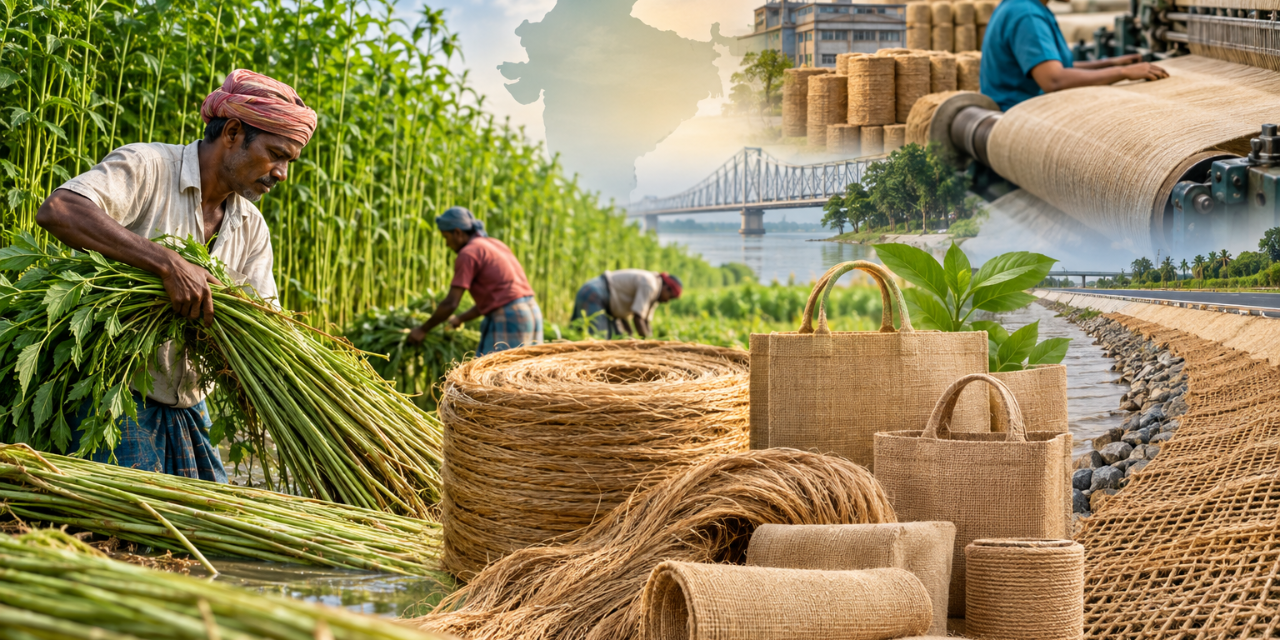
India’s jute sector is gaining importance as demand grows for natural and sustainable materials. Known as the **“Golden Fibre,” jute supports millions of farmers and workers while serving packaging, agriculture, construction and textile markets.
India is the world’s largest producer of raw jute. The country also contributes around 75% of global jute goods production. The sector supports nearly 40 lakh farm families and provides direct employment to about 3.70 lakh workers in organised mills and diversified jute units.
West Bengal Leads Jute Production
West Bengal is India’s largest jute-producing state. Bihar, Assam, Odisha and Jharkhand are other key producing regions.
Jute is mainly sown during March and April. Farmers usually harvest the crop within 100 to 110 days. The crop grows well in hot and humid conditions and is largely rainfed.
India had 120 composite jute mills as of December 2025. West Bengal accounted for 89 of these mills.
Jute Production and Exports
India produced around 76 lakh bales of raw jute and 12.80 lakh metric tonnes of jute goods in 2025–26.
The country exported 1.71 lakh metric tonnes of jute goods during the year. These exports were valued at Rs 3,155.27 crore. Domestic consumption remained strong at 12.05 lakh metric tonnes.
Government Supports Farmers
The government continues to support jute farmers through the Minimum Support Price (MSP) system.
For 2026–27, the MSP for raw jute has been fixed at Rs 5,925 per quintal. The Jute Corporation of India purchases raw jute from farmers when market prices fall below the MSP.
The National Jute Development Programme also supports productivity, farmer incomes and product diversification. Initiatives such as JUTE-ICARE promote better cultivation methods, mechanisation and improved retting practices.
Jute Moves Beyond Packaging
Jute is no longer limited to traditional bags and packaging. The fibre is now being developed for technical textiles, geotextiles, apparel and other value-added products.
Jute geotextiles can help control soil erosion and stabilise slopes. They are also being used in areas such as roads, railways and riverbank protection.
Jute-blended fabrics are also gaining attention in apparel. This shows the potential of jute as a biodegradable textile material.
Technology Boosts the Sector
Technology is also changing the jute supply chain. The JUTE-SMART portal helps manage the procurement and supply of jute sacking bags.
The government has also introduced digital tools to monitor jute cultivation. These include BHUVAN JUMP and PATSAN, which use satellite and field data to support crop monitoring.
A Sustainable Future for Jute
India’s jute industry is gradually moving from traditional packaging towards sustainable materials, technical textiles and diversified products.
With strong domestic production and a large farming base, jute can support rural livelihoods while reducing dependence on plastic and synthetic materials. Continued investment in technology, innovation and product development can further strengthen India’s position in the global jute market.