
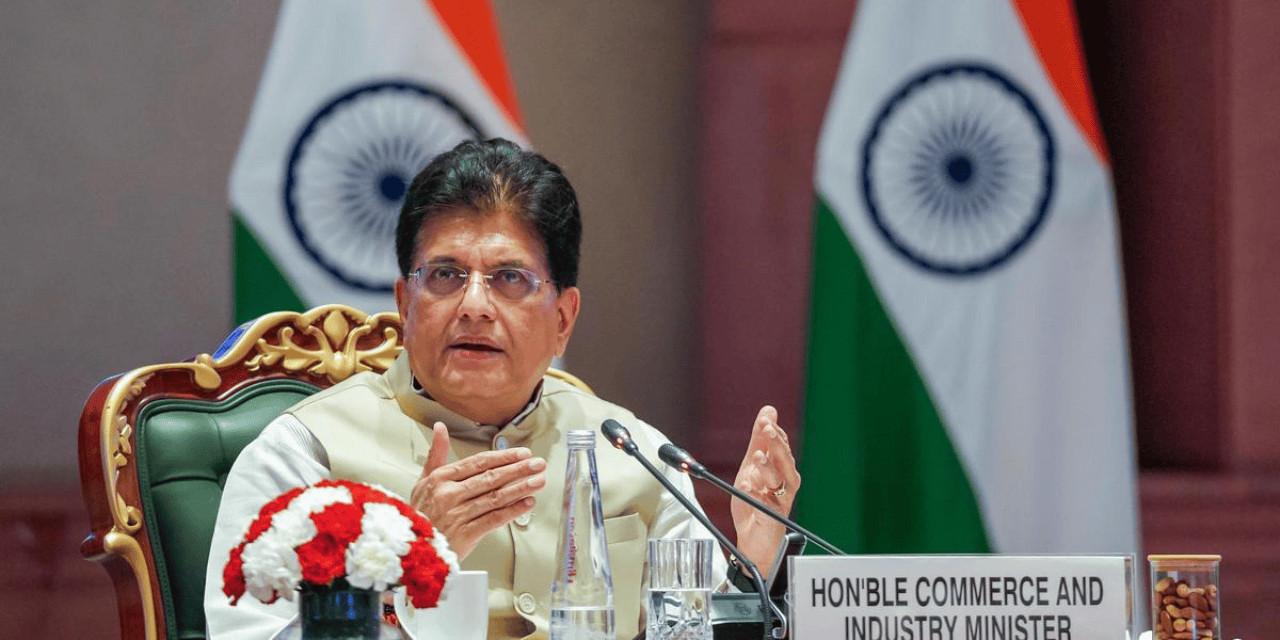
India’s textile sector has a stronger chance to grow exports, according to Commerce and Industry Minister Piyush Goyal.
Goyal said Indian textile exporters now face better tariff conditions in many major markets. In several cases, Indian products have tariffs that are similar to, or lower than, those faced by key rivals such as Bangladesh and Vietnam.
He made the remarks at the National Workshop on Leveraging FTAs in New Delhi.
FTAs open more markets
Goyal said India has signed nine free trade agreements (FTAs). Together, these agreements cover countries with about $60 trillion in GDP.
The deals give Indian businesses preferential access to nearly two-thirds of global trade, he said.
India is also working on more trade deals. These include talks with Canada, Mexico, Chile, Mercosur countries, the South African Customs Union, the Gulf Cooperation Council and Israel.
India is also reviewing some existing agreements. These include deals with Korea, Japan and ASEAN.
Goyal said the combined network could give India access to about 75% of global trade at competitive tariff rates.
Textile exporters face fewer barriers
For years, Indian textile exporters faced higher duties in key developed markets.
This made it harder for Indian companies to compete with Bangladesh and Vietnam. Bangladesh benefits from its least-developed country status in some markets. Vietnam also has several trade agreements that give its exporters lower duties.
Goyal said the gap is now narrowing.
He added that Indian textile products can now receive tariff rates that are equal to, or better than, those available to competitors in many developed markets.
Focus shifts to performance
Goyal said the textile industry must now make the most of these new opportunities.
He called on exporters to use FTAs more effectively and expand their presence in global markets.
The government also wants FTA benefits to reach smaller businesses. This includes traders, entrepreneurs, startups and women entrepreneurs across India.
The minister said the effort should reach businesses in all 780 districts.
For India’s textile industry, better tariff access could support export growth. The key task now is to turn this market access into higher exports and stronger global competitiveness.