
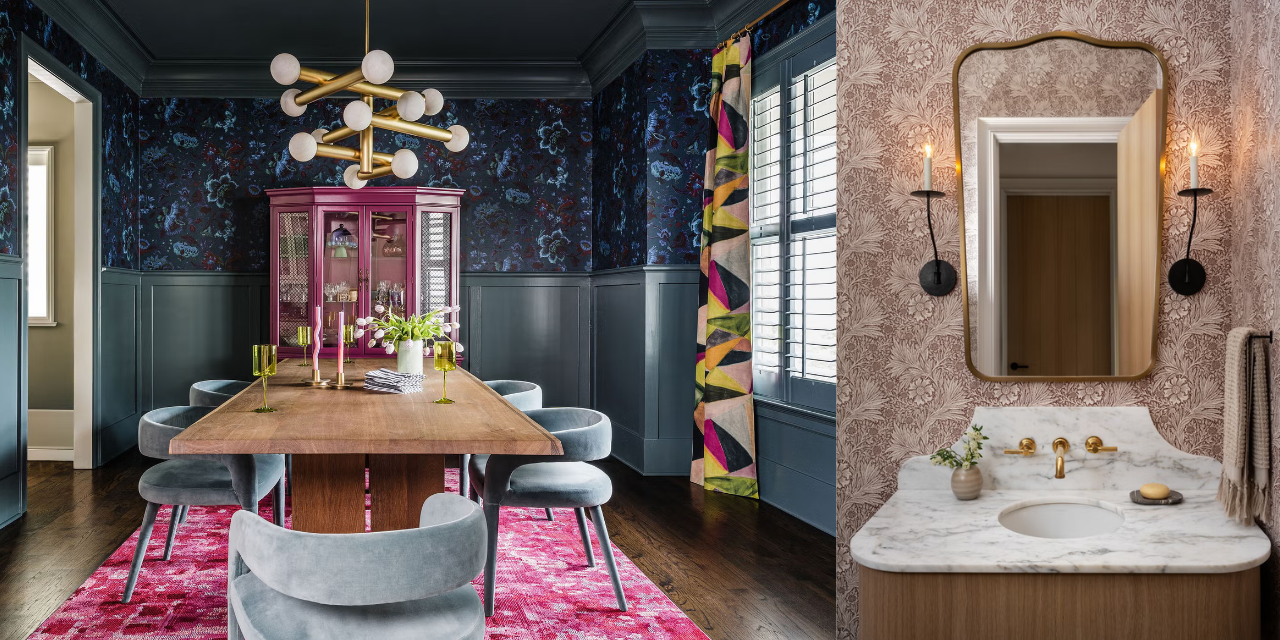
Matching wallpaper with paint and decor can help create a cohesive and balanced interior. Designers recommend repeating colours, balancing bold patterns with neutral textures, and choosing finishes that complement the wallpaper.
Wallpaper is becoming a popular choice for adding colour, pattern and character to interiors. According to a survey by Thumbtack, 61% of respondents said they would consider incorporating at least one type of pattern into their homes over the next year.
The trend highlights growing interest in patterned walls, floral prints and decorative designs. However, choosing the right wallpaper is only one part of the process. Coordinating it with paint, furniture and textiles is equally important.
Repeat Colours from the Wallpaper
Interior designer Wendi Gee recommends selecting one colour from the wallpaper and repeating it in at least two other areas of the room. This could include cushions, rugs, lamps, artwork or painted surfaces.
Repeating colours helps connect different elements and creates a more coordinated look. Using the same shade in two or three places can also make the overall design feel more intentional.
Balance Bold Patterns with Neutral Textures
Wallpaper with strong colours or busy patterns can become the main feature of a room. Designer Joe Waroquier suggests balancing these designs with materials that do not compete for attention.
Natural wood, velvet upholstery and woven textures can complement bold wallpaper. Mixing different materials and finishes also adds depth and creates a more layered interior.
Consider Wallpaper Undertones
The undertones in wallpaper can influence how other colours appear in a room. Designers recommend matching the colour temperature of paint, furniture and textiles with the wallpaper.
For example, warm-toned wallpaper can work well with natural wood and warm upholstery. Cool-toned finishes may suit wallpapers with cooler shades. Keeping these undertones consistent helps maintain visual balance.
Mix Prints and Patterns Carefully
Wallpaper does not have to be the only patterned element in a room. Smaller stripes, subtle upholstery prints and complementary decorative fabrics can work alongside larger wallpaper designs.
Waroquier recommends varying the scale of patterns and repeating a shared colour across different designs. This approach helps create a layered interior without making the space feel visually overwhelming.
By coordinating colours, textures and patterns, homeowners can create interiors that feel connected and personal. These design principles also offer a practical way to introduce statement wallpaper while maintaining balance across the room.


