
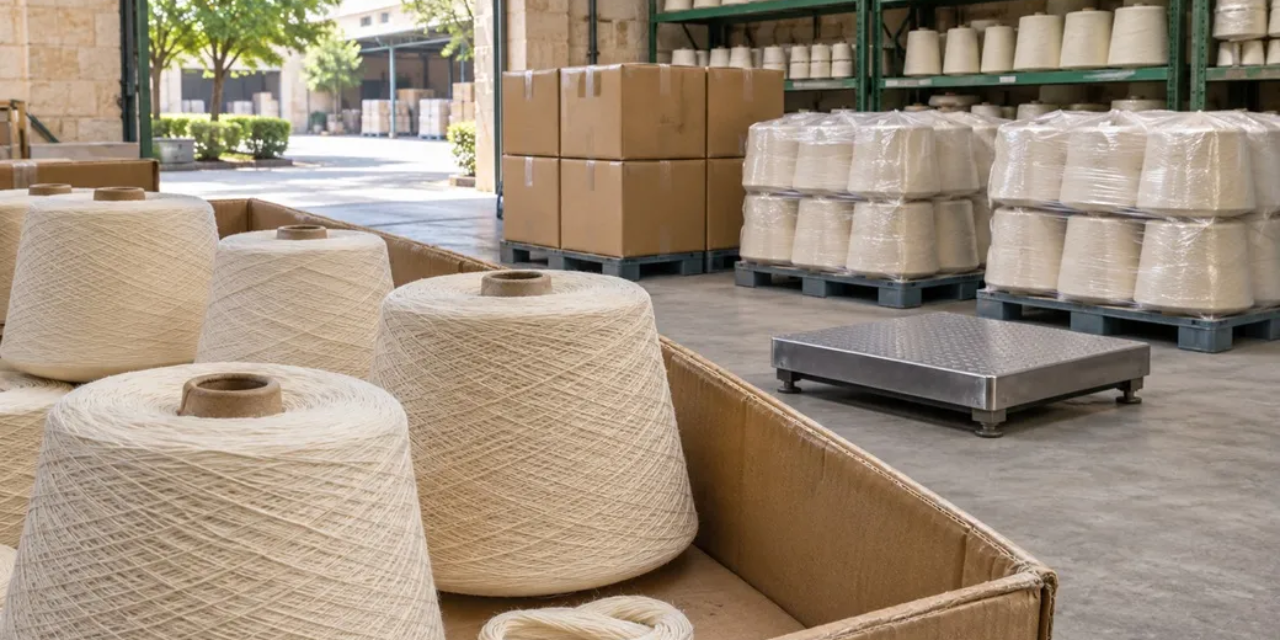
North India’s cotton yarn market continued to witness slow trading after Diwali, with buyers remaining cautious about fresh purchases. Prices stayed stable in Ludhiana and Delhi. However, Panipat’s recycled yarn market remained under pressure due to weak domestic and export demand.
According to Fibre2Fashion, traders expect buying activity to improve after the festive season. Downstream manufacturers may return to the market to replenish stocks as garment production picks up.
Ludhiana Cotton Yarn Market Sees Thin Trading
In Ludhiana, cotton yarn prices remained unchanged despite limited trading activity. Buyers showed little interest in fresh orders as the festive mood affected market operations.
A local trader told Fibre2Fashion that demand could improve after the festival. Higher summer garment production may support fresh buying in the coming weeks.
However, slow payments remain a concern across the textile value chain. Traders continue to face cash flow challenges, which are affecting overall market activity.
Delhi Prices Remain Stable
Cotton yarn prices in Delhi also remained steady. Market participants continued to adopt a cautious approach amid limited demand and slow trading.
The market is awaiting stronger buying interest from downstream textile and garment manufacturers. Improved stock replenishment could support trading activity after the festive period.
Panipat Recycled Yarn Market Faces Pressure
Panipat’s recycled yarn market continued to face weak demand. Both domestic and export orders remained limited, putting pressure on market sentiment.
The recovery in this segment will depend on improved orders from textile manufacturers and stronger buying interest from overseas markets.
Cotton Prices Recover on Stronger Futures
Meanwhile, cotton prices recovered on Thursday. Stronger ICE cotton futures supported the upward movement. Seed cotton prices also increased as ginning mills continued regular purchases.
Overall, North India’s cotton yarn trade remains cautious. Traders expect demand to improve after Diwali as manufacturers resume purchasing and replenish their inventories. However, payment delays and weak recycled yarn demand remain key concerns for the market.


