
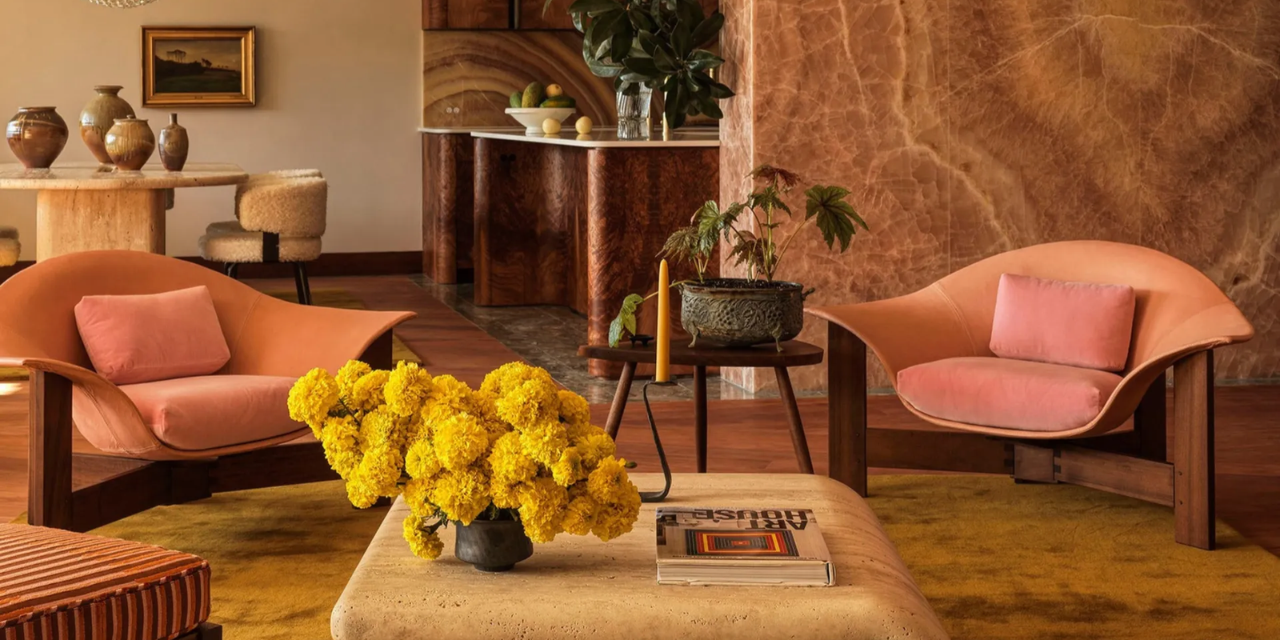
The quiet contrast trend combines similar colours, varied textures and natural materials to create layered interiors with subtle visual depth.
The quiet contrast interior trend is emerging as a key design direction for 2027. It focuses on combining materials and finishes that look similar but retain subtle differences in colour, texture and grain.
Featured in Livingetc’s Style Pulse SS27 trend report, the approach offers an alternative to bold contrasts and uniform colour schemes. Designers are exploring how carefully layered materials can add depth while maintaining a cohesive look.
Similar Colours, Different Textures
The trend brings together materials within the same colour family. Examples include clay-pink walls paired with plum and peach marble, or different wood grains used within one room.
Designers also combine tactile finishes such as cotton velvet, mohair, polished plaster and natural stone. Although the colours remain close, differences in sheen and surface texture create visual interest.
Interior designer Róisín Lafferty applies this approach by pairing marble in plum, burgundy and peach tones with soft clay-pink walls. The palette highlights the stone’s natural variations without introducing a sharp colour contrast.
Natural Materials Add Depth
Wood veneers, marble, terrazzo and handmade finishes are also central to the quiet contrast trend. Rather than matching every surface, designers use related tones and varied patterns to create a more individual interior.
Nicholas G Potts of Nicholas Potts Studio recommends shifting the scale of similar materials and connecting them through colour or theme instead of replicating the same finish.
The approach also reflects growing interest in tactile interiors and personal design choices. By combining subtle differences rather than relying on stark contrasts, homeowners can create spaces that feel layered, cohesive and distinctive.
The quiet contrast trend offers a flexible way to introduce texture and character into living rooms, bedrooms, bathrooms and other interior spaces in 2027.