
The global recycled denim fiber market is growing as brands seek sustainable materials and better ways to reduce textile waste.
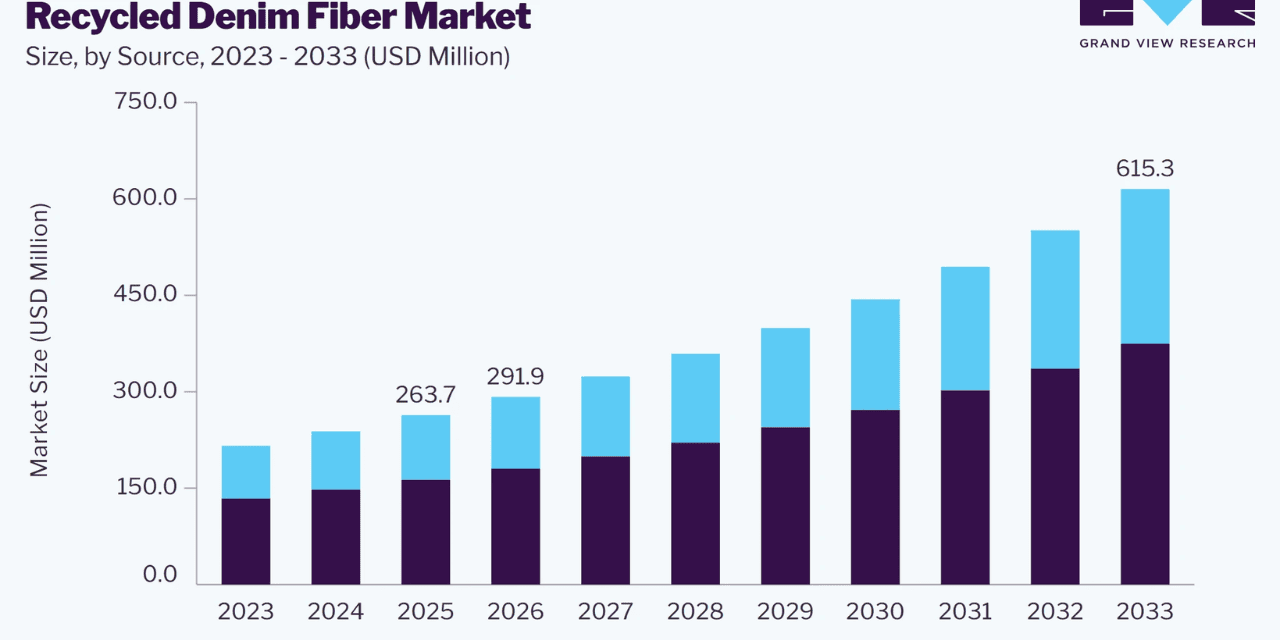
The global recycled denim fiber market is set for strong growth over the next few years. According to Grand View Research, the market was worth USD 263.7 million in 2025.
The market is expected to reach USD 291.9 million in 2026. It could then rise to USD 615.3 million by 2033.
This represents a CAGR of 11.2% from 2026 to 2033.
The growth is linked to rising textile waste. It is also supported by growing demand for recycled and sustainable materials. In addition, fashion brands are looking for ways to reduce their use of virgin raw materials.
Recycled Denim Fiber Demand Continues to Rise
Denim is well suited for recycling. Large amounts of denim waste are created during clothing production. Used denim garments also provide a large source of waste.
This waste can be collected and processed into recycled fibers. These fibers can then be used to make new yarns and fabrics.
As a result, recycled denim is gaining attention across the textile industry.
Brands are also adding more recycled materials to their product lines. This trend is being supported by growing interest in sustainable fashion.
At the same time, textile companies are working to build more circular supply chains.
Asia Pacific Leads the Market
Asia Pacific held the largest share of the global market in 2025. The region accounted for 40.4% of market revenue.
China was the leading country in the Asia Pacific market.
The region has a large textile and apparel industry. It also has a strong manufacturing base. These factors are helping support demand for recycled denim fiber.
Moreover, many textile producers in the region are investing in recycling and sustainable production.
The Middle East and Africa region is expected to record the fastest growth from 2026 to 2033.
Apparel and Textiles Hold the Largest Share
The apparel and textiles segment accounted for 52.5% of market revenue in 2025.
This makes it the largest application segment.
Recycled denim fiber can be used in a wide range of textile products. It can be processed into yarn and fabric for clothing.
However, recycled fibers may have lower strength than virgin fibers. Therefore, manufacturers often blend recycled fibers with virgin cotton or other fibers.
This helps improve the strength and quality of the final product.
Chemical Recycling Shows Strong Growth
Mechanical recycling remains an important part of denim recycling.
First, denim waste is collected and sorted. The material is then shredded and opened. After that, it is processed into fibers.
However, mechanical recycling has some challenges.
Repeated processing can make fibers shorter. It can also reduce fiber strength. Therefore, recycling companies are working on better processing methods.
Chemical recycling is also gaining attention. According to the market report, the chemical recycling segment is expected to grow at a CAGR of 13.0% from 2026 to 2033.
New recycling technologies could help improve fiber quality. They may also support wider use of recycled textile materials.
Post-Consumer Denim Waste Gains Importance
Used clothing is becoming an important source of recycled fiber.
The post-consumer denim waste segment is expected to grow at a CAGR of 11.6% from 2026 to 2033.
This growth is linked to better collection systems and growing interest in textile recycling.
Many brands are also exploring take-back programs. These programs allow consumers to return used clothing.
The collected garments can then be sorted and sent to recycling facilities.
Better sorting can also improve recycling results. Waste can be separated by fiber type, color, and level of contamination.
Sustainability Supports Market Growth
Sustainability is one of the main drivers of the recycled denim fiber market.
Traditional textile production uses large amounts of natural resources. Cotton production, for example, needs land and water.
Textile production also creates waste at different stages. This includes cutting waste from factories and old garments from consumers.
Recycled denim fiber provides a way to reuse some of this material.
It can help reduce textile waste. It can also reduce the need for new raw materials.
For this reason, recycled fibers are becoming more important to fashion and textile companies.
Brands Focus on Circular Fashion
The fashion industry is moving toward a more circular model.
In the traditional model, materials are produced, used, and discarded. The circular model aims to keep materials in use for longer.
Recycling is an important part of this change.
Brands are now working with textile mills, recyclers, and fiber producers. Together, they are developing new ways to collect and reuse textile waste.
These partnerships can help improve the supply of recycled fibers.
They can also support the growth of fiber-to-fiber recycling.
Technology Can Improve Fiber Quality
Technology is playing an important role in the development of recycled denim fiber.
Better sorting systems can help identify suitable textile waste. They can also separate materials based on their fiber content.
Improved opening and recycling equipment can help recover more usable fibers.
These developments are important because fiber quality remains a key challenge.
Manufacturers need recycled fibers that can meet the performance needs of finished products.
Therefore, continued investment in recycling technology will be important for market growth.
Market Faces Several Challenges
Despite strong growth, the recycled denim fiber market faces some challenges.
The quality of textile waste can vary. Collection systems may also be limited in some markets.
Sorting can be difficult when garments contain different fibers or other materials.
Mechanical recycling can also reduce fiber length. This may affect the strength of recycled yarns and fabrics.
In addition, recycled denim competes with virgin cotton and other recycled fibers.
Therefore, companies will need better technology and stronger supply chains to overcome these challenges.
Recycled Denim Market Outlook
The global recycled denim fiber market is entering a period of strong growth.
The market is expected to increase from USD 263.7 million in 2025 to USD 615.3 million by 2033.
Growing textile waste is supporting this demand. So is the move toward circular fashion.
Meanwhile, brands are looking for new ways to reduce their environmental impact. This is creating opportunities for recycled fiber producers and textile recyclers.
Asia Pacific is expected to remain an important market. At the same time, other regions are also likely to see growing demand.
As recycling technology improves, recycled denim fiber could become an increasingly important material for the global textile industry.


