
Defence spending across the European Union reached approximately €381 billion in 2025, reinforcing the growing role of advanced materials in the sector. This trend is further reflected in the European Defence Fund’s 2026 Work Programme, which designates “smart and multifunctional textiles” as a priority focus area.
Techtextil 2026 aligns with this momentum by showcasing practical, industrial-scale solutions. Scheduled from April 21 to 24, 2026, in Frankfurt am Main, the event will host over 1,500 exhibitors, with more than 10% presenting innovations specifically for protective textile applications.
Within the textile value chain, the effectiveness of personal protective equipment (PPE) is largely determined at the material level. Manufacturers require textiles that combine ballistic resistance, flame retardancy, and long-term durability, while also maintaining comfort and ergonomic performance. Simultaneously, regulatory pressures such as restrictions on PFAS are driving the search for alternative solutions in water-, oil-, and dirt-repellent finishes.
From a procurement and manufacturing perspective, emphasis is increasingly placed on industrial viability. Stakeholders are seeking materials and textile components that meet regulatory standards, ensure repeatable performance, and can be produced consistently at scale. This is particularly critical for applications such as ballistic systems and CBRN protective gear.
Techtextil provides a comprehensive overview for decision-makers aiming to position themselves in the expanding protective textiles market. More than 150 specialised exhibitors will contribute across the value chain—from fibre-level innovations to finished materials. For instance, the Lenzing Group will present inherently flame-retardant cellulose fibres that integrate thermal protection at the fibre stage, while HS Hyosung Advanced Materials will showcase high-performance synthetic yarns.
Running alongside Techtextil, Texprocess will further extend the scope into finishing and industrial production technologies. With approximately 200 exhibitors in Hall 8.0, the combined events will bring together over 1,700 exhibitors at the Frankfurt exhibition grounds.
“Requirements for protective fabrics are becoming increasingly similar across many fields of application: low weight, high durability, thermal comfort, and reproducible processing,” explains Lotje Oosterlinck, Product Manager Workwear at Concordia Textiles. “What is becoming decisive, therefore, is the ability to develop material solutions across different protection domains and to transfer them into industrial processes tailored to specific applications.”
Industrial Scalability: From Fibre to Protective Systems
In Hall 9.0, the “Performance Apparel Textiles” zone will feature around 150 exhibitors presenting real-world protective clothing applications, including the live showcase “Performance Apparels on Stage.” Supporting this is the newly introduced “Textile Chemicals & Dyes” segment, where over 30 exhibitors connect chemical innovations directly to textile applications.
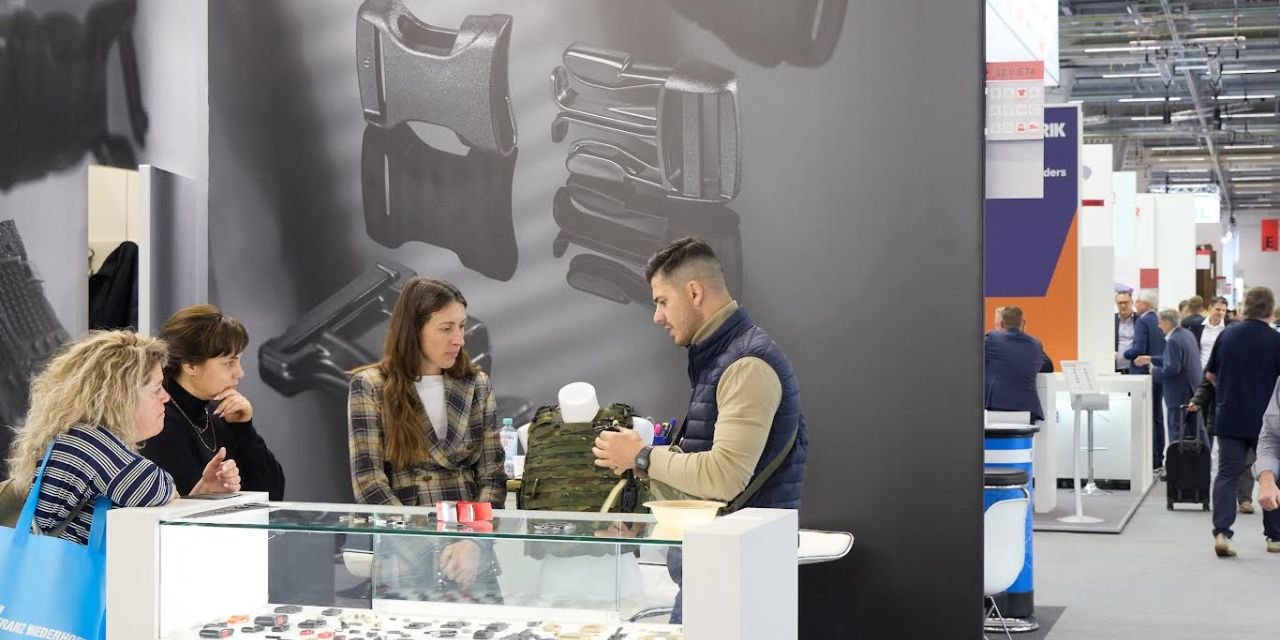
Specialist manufacturers such as Güth & Wolf GmbH, JUMBO-Textil GmbH & Co. KG, and Otto Stockmayer & Sohn GmbH will contribute essential mechanical components, including narrow textiles, webbings, and knitted fabrics designed for high-performance use.
“In protective textiles, market relevance is not determined by a new fibre or finish alone. Particularly in demanding applications, testability, reproducibility and the reliable transfer into industrial processes are becoming the true benchmarks of innovation,” says Dr. Heike Illing-Günther, Managing Director of the Saxon Textile Research Institute.
The Techtextil Forum will complement the exhibition by offering technical insights and discussions. With contributions from NASA experts and sessions on themes such as “Textile Intelligence” and “Resilient Textiles,” the forum will focus on enabling smart functionality, improving material resilience, and accelerating the transition from concept to scalable industrial applications.