
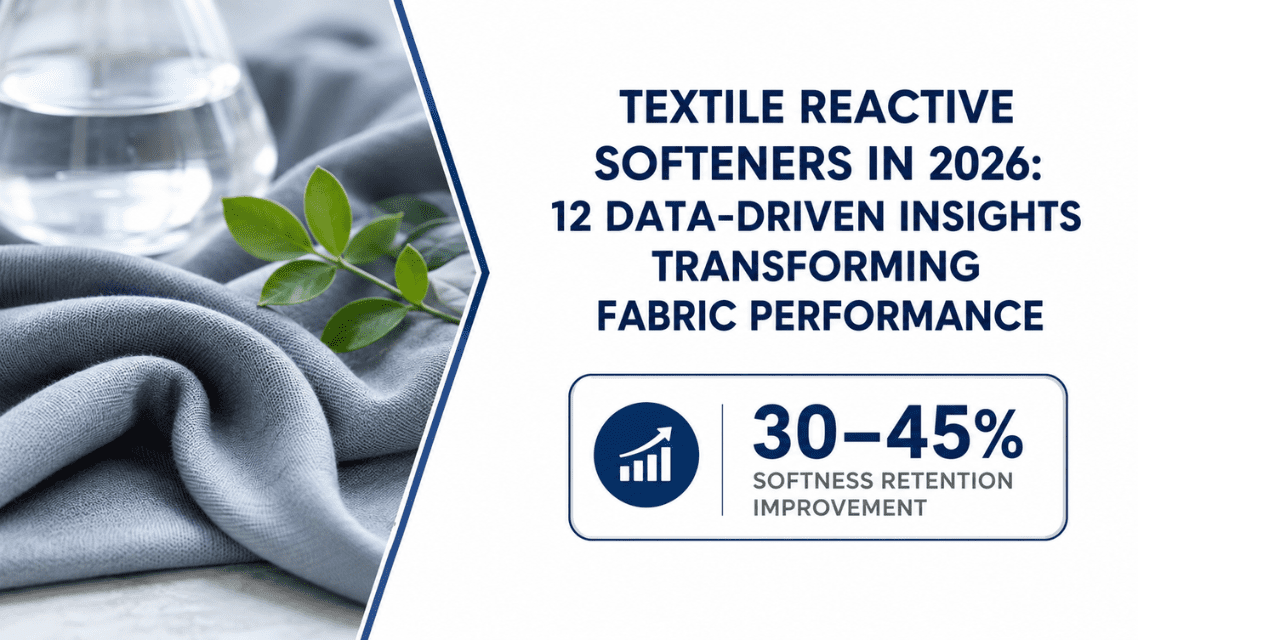
Data-driven insights highlight growing adoption of advanced finishing technologies across the global textile industry
The global textile industry is increasingly investing in advanced finishing technologies to improve fabric quality, durability and consumer comfort. Among these innovations, textile reactive softeners have emerged as a key solution for manufacturers seeking enhanced fabric performance while meeting growing sustainability requirements.
According to industry analysis from Dataintelo, more than 65% of premium apparel manufacturers are now utilizing reactive softening technologies to improve fabric hand feel, wash durability and product longevity. Unlike conventional softeners, reactive softeners chemically bond with textile fibres, allowing them to retain softness and performance over extended periods of use.
Industry data indicates that reactive softeners can deliver softness retention rates between 30% and 45% higher than traditional alternatives after repeated laundering cycles. Laboratory testing conducted between 2023 and 2025 found that cotton fabrics treated with reactive softeners retained approximately 85% of their softness after 25 washes, compared to 58% for fabrics treated with standard softeners.
Rising Demand for Premium Fabric Performance
Consumer expectations continue to influence textile finishing decisions. Research conducted in 2025 showed that 78% of apparel buyers consider fabric softness an important purchasing factor. In addition, 63% of consumers indicated a willingness to pay more for garments offering a premium feel, while 54% associated softness with higher product quality.
These trends are encouraging textile manufacturers to adopt finishing technologies that deliver long-lasting comfort and improved product performance.
Production Efficiency Benefits
Beyond enhancing fabric quality, reactive softeners are also helping textile mills improve operational efficiency. Facilities implementing advanced reactive softening systems have reported measurable gains, including a 15% reduction in reprocessing requirements, 18% faster finishing operations, 12% lower chemical consumption and a 10% decrease in production downtime.
For large-scale textile mills processing millions of metres of fabric annually, these improvements can translate into significant cost savings and higher productivity.
Performance Advantages Over Conventional Softeners
Industry comparisons reveal a clear performance gap between reactive and conventional softeners. Reactive formulations maintain softness levels of approximately 85% after 25 washes, compared to 58% for traditional softeners. Fabric durability improvements can reach up to 50%, while reapplication requirements are significantly reduced due to the stronger bond formed between the softener and textile fibres.
Reactive softeners have also demonstrated greater efficiency across a wide range of materials, including cotton, polyester blends, knitted fabrics and home textiles.
Supporting Sustainable Textile Manufacturing
Sustainability remains a major priority for textile producers worldwide, and reactive softeners are contributing to environmental performance improvements across manufacturing operations.
Modern finishing processes using reactive chemistry can reduce water consumption by 10% to 18% compared with conventional treatments. For a facility using 100 million litres of water annually, this represents potential savings of up to 18 million litres per year.
Research conducted between 2022 and 2025 also suggests that reactive formulations can reduce chemical discharge by 15% to 25%, supporting compliance with increasingly stringent environmental regulations. In addition, process optimisation enabled by reactive softeners may lower energy consumption by 8% to 14%, contributing to reduced carbon emissions.
Real-World Results
A medium-sized textile manufacturer processing 25 million metres of fabric annually implemented reactive softener technology during 2024. After one year, the company reported a 22% reduction in customer quality complaints, a 17% decrease in finishing costs, a 19% reduction in water consumption and a 14% improvement in production throughput.
The company also recorded a 28% increase in repeat orders from apparel brands, highlighting the commercial benefits of improved product quality and consistency.
Outlook Through 2030
Industry forecasts indicate continued growth for reactive softener technologies across apparel, home textiles, technical textiles and performance fabrics. Premium textile demand is expected to increase by 7% to 9% annually, while investments in sustainable textile processing are projected to grow at a compound annual growth rate of 12% through 2030.
Market analysts also anticipate that high-performance finishing chemicals will achieve more than 70% market penetration among large textile manufacturers by the end of the decade.
As textile producers seek solutions that balance quality, efficiency and sustainability, reactive softeners are becoming an increasingly important component of modern finishing operations. With proven improvements in softness retention, durability, resource efficiency and environmental performance, these technologies are expected to play a central role in the future of textile manufacturing.


