
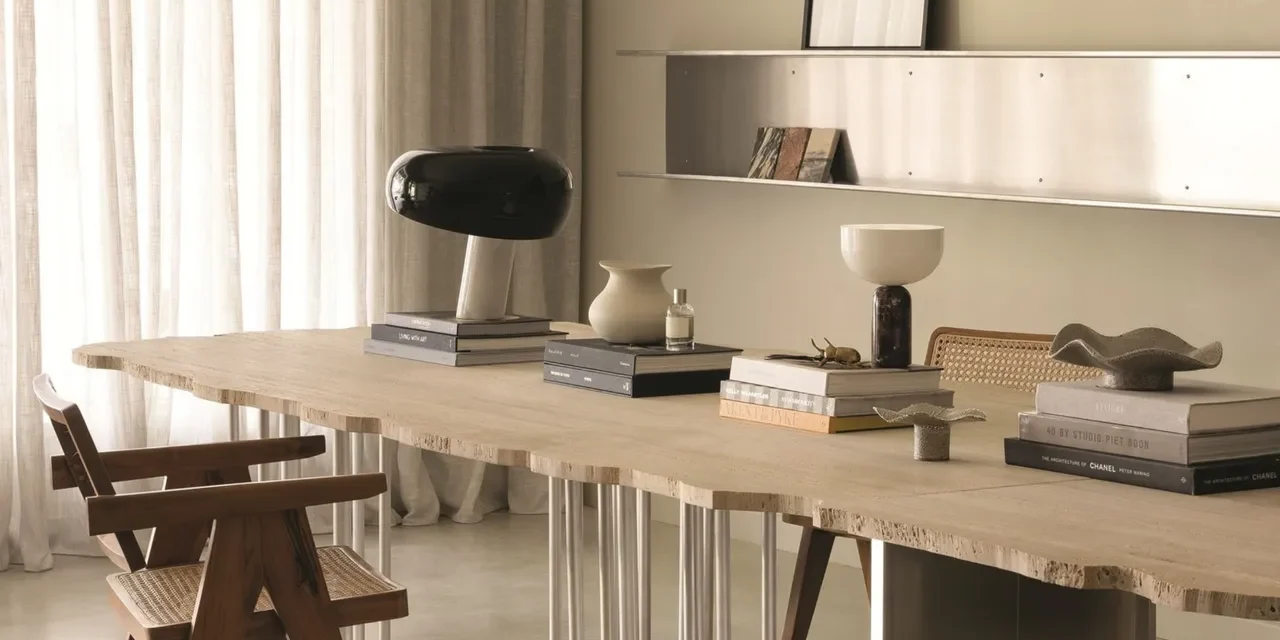
Textured table edges are emerging as a design trend in modern interiors. Interior designers are using carved wood and rough-finished stone to add natural detail, warmth and character to living spaces.
Unlike tables with smooth, polished edges, these designs highlight the natural qualities of materials. The finishes include carved, hammered and irregular edges that create visual depth and a handcrafted appearance.
Textured Table Edges Add Contrast to Interiors
Designers are incorporating this detail into both contemporary and minimalist interiors. The rough surfaces contrast with clean lines, polished metals and smooth finishes. This mix helps create layered and visually interesting spaces.
Steffanie Ball, co-founder of furniture brand En Gold, says rough-edged tables highlight the natural imperfections of materials. They also introduce warmth and authenticity into rooms with refined finishes.
Interior designer Adyn Kelly has used travertine with an irregular edge and chrome legs. The combination brings together the raw appearance of stone and the precision of metal.
Where to Use Textured Table Designs
Dining tables are a popular choice for this finish. However, designers suggest using textured edges on smaller furniture and decorative elements as well.
Coffee tables, bedside consoles, shelving, display plinths and bathroom vanities can all feature this detail. Stone bowls, sculptural objects and decorative vessels also offer subtle ways to introduce texture.
Designers recommend balancing rough finishes with softer materials. Upholstered seating, linen, timber and warm lighting can complement the natural appearance of stone and wood.
A Focus on Natural Materials
The textured table edge trend reflects an interest in tactile surfaces and handcrafted details. It allows natural materials to become a focal point without adding elaborate decoration.
However, practicality remains important. Rough surfaces may require more care during cleaning, depending on the material and finish.
For homeowners and interior designers, textured table edges offer a way to bring organic forms and material contrast into modern living spaces.