
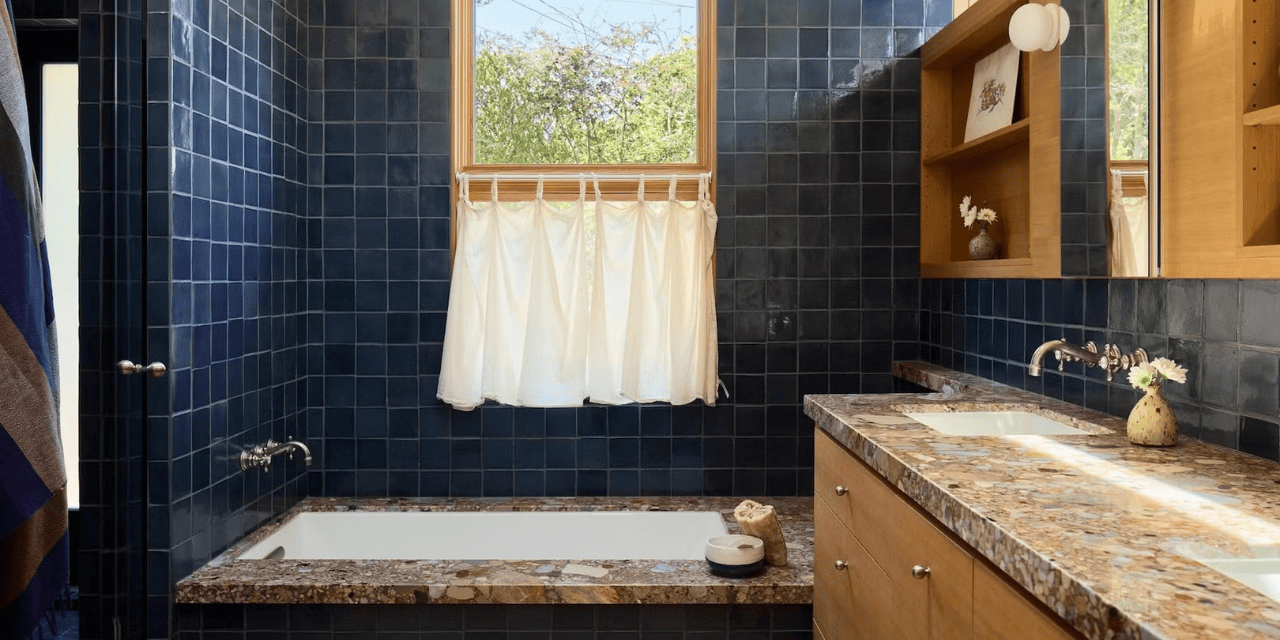
Two-tone bathroom schemes, simple tile shapes and bold colors are giving tiled bathtubs a fresh new appeal.
Tiled bathtubs are making a comeback in modern bathroom design. Once viewed as an outdated feature, built-in tubs with ceramic or porcelain exteriors are gaining attention from designers again.
The renewed interest reflects a broader shift in bathroom interiors. Homeowners are moving beyond the highly polished spa-style bathroom. Instead, many are looking for spaces with more personality, color and character.
Tiled Tubs Bring Back a Classic Look
Boxy bathtubs became popular during the early 20th century. They also returned in different forms over the following decades.
Today, designers are rethinking the look with modern colors and simple tile patterns.
“People are embracing bathrooms that feel a little more old-school and less zen spa-like,” says Max Humphrey, a Portland, Oregon-based designer. “Tiling in the tub makes it feel built-in and intentional.”
The approach can also make the bathtub feel like part of the overall room design. Rather than treating the tub as a separate fixture, designers can use tile to connect it with walls, floors and shower areas.
Matching Tiles Can Make Bathrooms Feel Larger
One advantage of a tiled bathtub is its ability to visually connect different areas of the bathroom.
Shannon Kadwell, kitchen and bath director at Anthony Wilder Design/Build in Maryland, says matching the tub tile with the shower backsplash can create an optical illusion.
“It tricks the eye into perceiving a continuous, expanded floor plan,” she explains. “Making small or average-sized bathrooms feel significantly larger.”
This technique can be especially useful in compact bathrooms. Using the same tile across connected surfaces creates a more seamless appearance.
A Versatile Choice for Different Spaces
Tiled tubs can work across several types of bathroom interiors. Designers see potential for the style in children’s bathrooms, pool bathrooms and other immersive spaces.
The choice of tile also offers plenty of room for customization.
Homeowners can explore subway tiles, penny tiles and mosaics. However, classic four-inch-by-four-inch tiles are emerging as a particularly appealing option.
“It has a retro quality without feeling like you’re trying too hard to make a bathroom look vintage,” says Humphrey.
He also suggests experimenting with tile layouts. A stacked pattern can give the bathroom a contemporary feel. An offset arrangement can create a more traditional look.
Planning Is Essential for a Tiled Bathtub
Installing tile around a bathtub requires careful planning. Designers recommend considering the bathtub type and tile material before starting the project.
Molly Purnell of LAUN in Los Angeles typically uses non-porous tiles with drop-in or undermount tubs.
The tile layout also deserves attention. Designers recommend mapping the pattern before installation.
This helps ensure that grout lines align with nearby floor and shower-wall patterns. Good planning can create a cleaner and more professional finish.
Grout also becomes an important design element. Square tiles can make grout lines highly visible. Homeowners should therefore choose grout colors carefully and be prepared for occasional maintenance.
Let the Tile Take Center Stage
A tiled bathtub does not need an elaborate pattern to make an impact.
“You don’t need an elaborate pattern or five different materials competing with it,” says Humphrey. “A basic shape in a great color is enough.”
Color can completely change the mood of the bathroom.
Bubblegum pink or soft blue can create a cheerful and playful space. Deeper shades such as merlot and navy can deliver a more dramatic atmosphere.
Humphrey recommends repeating the chosen color elsewhere in the bathroom. It could appear on a painted wall, vanity or decorative accessory.
This creates a stronger visual connection without making the space feel overly coordinated.
Will the Tiled Tub Trend Last?
Tiled bathtubs may be trending again, but the concept itself is far from new.
Clawfoot tubs and Jacuzzi-style arrangements will likely remain popular. Yet designers believe tiled tubs can have lasting appeal because they combine classic construction with contemporary styling.
“They’ve been around forever,” says Humphrey. “What feels fresh is the way people are using color and simpler tile shapes again.”
The latest comeback is less about recreating a vintage bathroom. Instead, it is about taking a familiar design element and giving it a modern update.
For homeowners seeking a bathroom with more personality, a tiled bathtub could offer the right balance of nostalgia, color and contemporary design.