
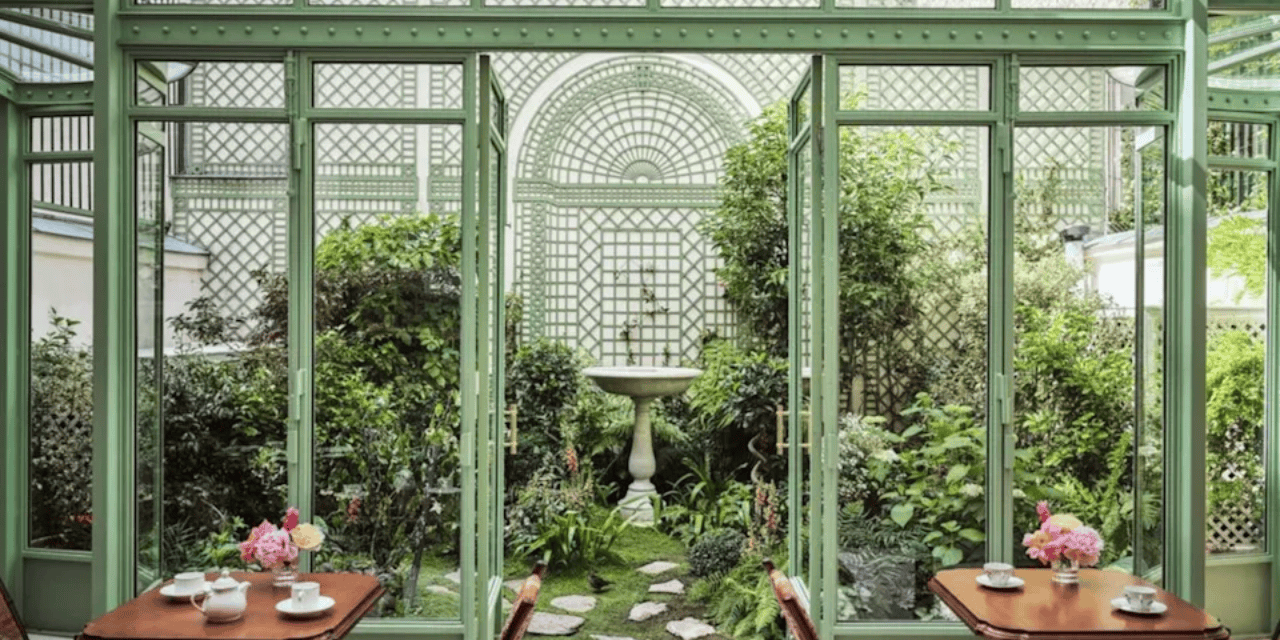
Treillage, a historic French garden design element, is finding a place in modern interiors. Designers are using the patterned structure on walls and ceilings to add texture and architectural detail.
The design dates back around three centuries in France. According to designer Antoine Fontaine, treillage can be seen at Versailles and in private mansions across Paris.
Traditionally, treillage was used outdoors and covered with climbing plants. Its regular pattern, however, can also create visual interest when left uncovered.
Treillage Moves Indoors
Designers are now using treillage to bring character and structure into interior spaces. Meg Lonergan of Meg Lonergan Interiors describes it as a way to add texture, rhythm and craftsmanship.
Fontaine recently used treillage at Hôtel des Peintres in Paris. The design connects a lush garden area with the hotel’s dining space and adds architectural depth.
Ways to Style Treillage
Paint it: Treillage can remain white or receive a stronger colour. Fontaine has used celadon green to complement a veranda.
Use it on ceilings: Applying treillage to a ceiling can create a layered look. It also adds detail to long or open spaces.
Create an accent wall: A treillage feature wall can add pattern and texture to a room without changing the entire interior.
The renewed interest in treillage shows how traditional architectural details can be adapted for contemporary home interiors.