
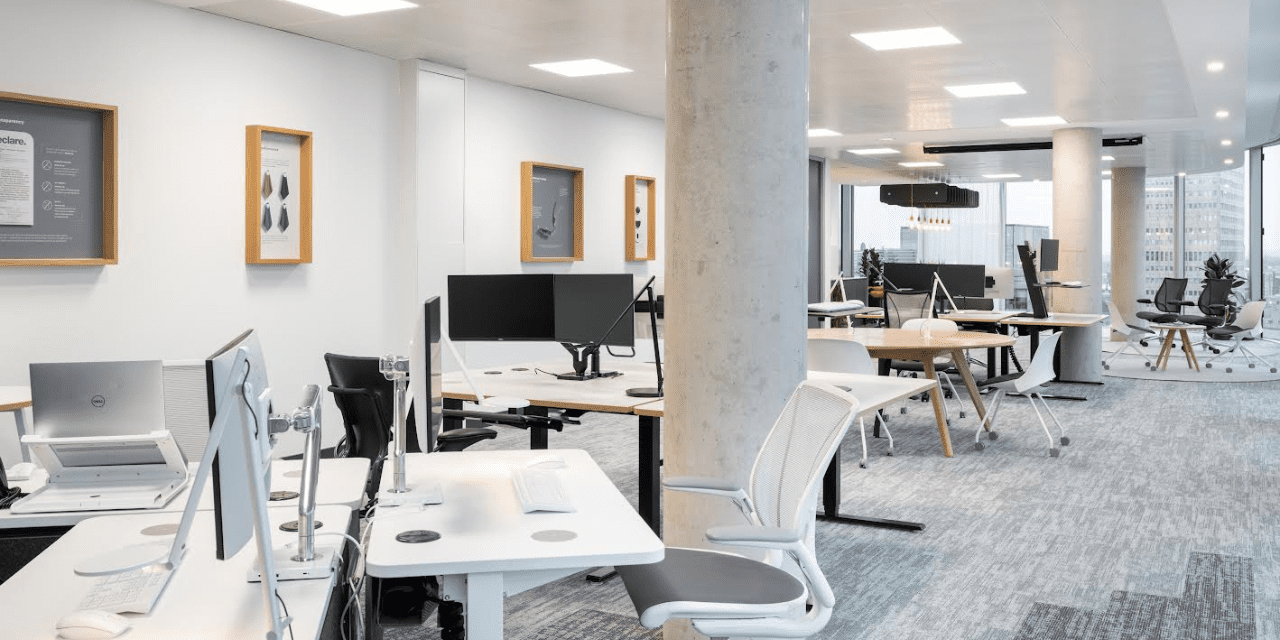
As organisations adapt to hybrid and remote working models, fresh insights from Humanscale underline that ergonomics has evolved from a simple wellbeing initiative into a core business strategy. With work patterns transformed, the growing disconnect between modern workspaces and human physiology has emerged as one of the most expensive and overlooked barriers to performance. Progressive organisations are now realising that traditional ergonomic approaches focused only on injury prevention are no longer sufficient. Instead, embedding proactive ergonomic design into workplace planning – across corporate offices, shared spaces and home work setups – can deliver tangible business outcomes by improving comfort, productivity, engagement and retention.
During a recent session with Worktech Academy, experts from Humanscale Consulting discussed the hidden costs of poor ergonomics, redefining what ergonomics truly means and why early intervention offers one of the strongest returns on investment available to organisations. As highlighted in the session, applying ergonomic principles before injuries develop is far more effective than reacting after physical strain becomes diagnosable. True ergonomics begins by designing work environments around people, rather than forcing people to adapt to poorly designed environments.
While workplace injuries are easy to track, they represent only a small portion of the overall impact. Persistent low-level discomfort such as back pain, neck stiffness and wrist strain gradually erode concentration, energy levels and performance. Research shared during the discussion indicated that employees experiencing ongoing discomfort can lose over five productive hours each week – amounting to nearly a quarter of their annual working capacity.
Ergonomics should not be viewed purely as a wellness perk, but as a performance accelerator. When workstations and tools are designed to support natural movement and healthy posture, employees can redirect their energy away from managing discomfort and towards higher-value work. This shift leads to measurable gains in focus, output quality and innovation.
In today’s hybrid work reality, employees operate across a mix of environments – from home offices and kitchen tables to co-working spaces and corporate workplaces – often without professional ergonomic guidance. This decentralisation has amplified hidden productivity losses and musculoskeletal strain that traditional performance metrics fail to capture.
A forward-looking ergonomics strategy includes human-centred workspace design from the outset to avoid costly retrofits, adaptable tools that support changing tasks and environments, and structured education programmes that help employees understand and optimise their own setups. Among these, education remains the most overlooked yet critical factor. Even the best-designed equipment fails to deliver results if users lack the knowledge to adjust it properly. Combining intuitive, human-centred products with ongoing ergonomics training ensures that investments translate into healthier employees, sustained comfort and stronger organisational performance.
As hybrid work becomes the long-term norm, ergonomics is set to play a central role in workplace strategy and design throughout 2026 and beyond.