
Duty-free access to the UK market is expected to strengthen India’s export competitiveness against preferential sourcing destinations.
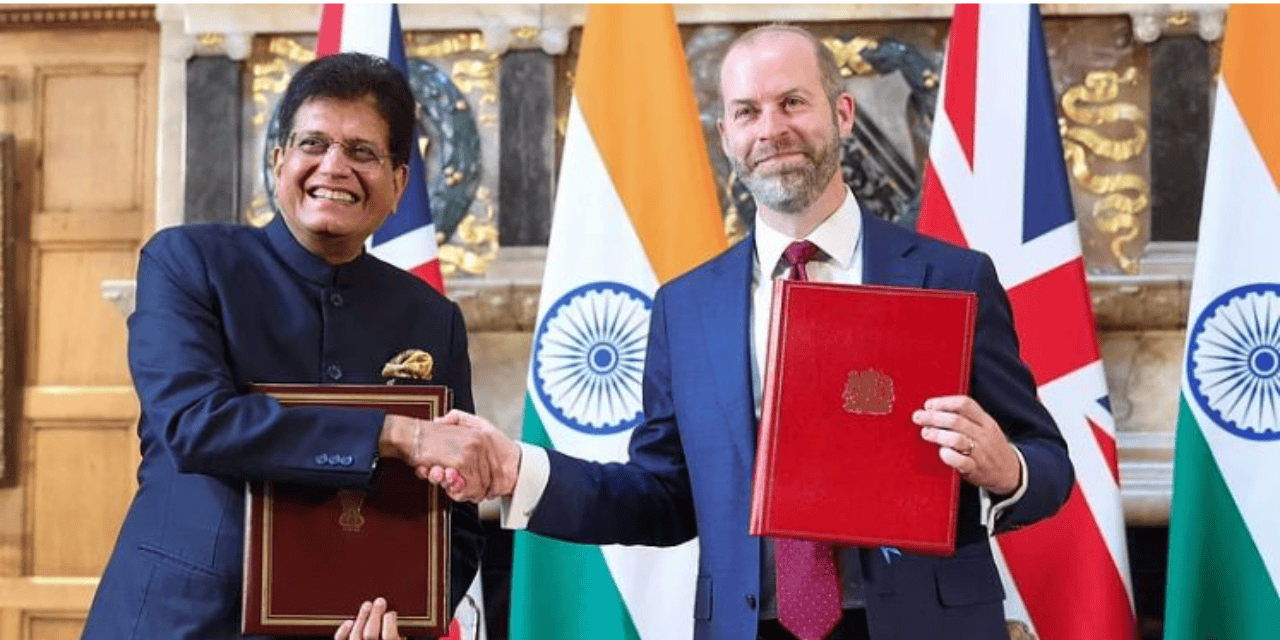
The signing of the India–UK Free Trade Agreement (FTA) is expected to provide a major boost to India’s textile and apparel exports, with optimistic estimates suggesting growth of up to 60% over the next three to five years.
India has historically faced a tariff disadvantage in the UK market, particularly against competitors such as Bangladesh, which has benefited from preferential duty-free access. The additional duty burden has made it difficult for Indian exporters to compete, particularly as global buyers have become increasingly price-sensitive.
Under the newly signed agreement, almost all Indian textile and apparel exports to the UK will receive duty-free access. Indian exporters previously faced import duties of around 8–12%, which added significantly to sourcing costs.
The UK imports an estimated US$20–25 billion worth of textiles and apparel annually, making it one of the leading markets globally. Bangladesh currently exports around US$4.1–4.5 billion worth of textile and apparel products to the UK, compared with India’s exports of approximately US$1.4 billion.
With a more level competitive environment, the agreement is expected to improve India’s position in the UK market. India’s integrated value chain, spanning farming, fibre, yarn, fabric, garment manufacturing and value-added processing, could further support long-term export growth.
The potential for exports to double over the longer term is considered achievable if the industry continues to improve its competitiveness. India’s integrated manufacturing structure also offers an advantage in comparison with Bangladesh, which remains largely dependent on imported fabrics for several product categories.
Industry experts believe fashion apparel, activewear, knitwear, denim, home textiles, technical textiles and man-made fibre-based products could be among the key beneficiaries. These segments are supported by India’s broad manufacturing capabilities and established textile value chain.
However, industry leaders have cautioned that sustained export growth will depend on India’s ability to deliver innovation, quality, sustainability, compliance and shorter lead times. These factors are increasingly important for international retailers and global sourcing programmes.
UK retailers including Marks & Spencer, Next, Tesco, Primark, John Lewis and ASOS are expected to expand sourcing programmes from India. Textile and garment hubs such as Tiruppur, Noida, Bengaluru, Ludhiana, Jaipur, Karur and Panipat could consequently see greater buyer engagement in the coming years.