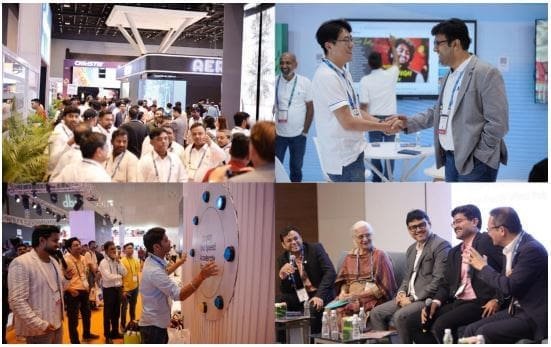
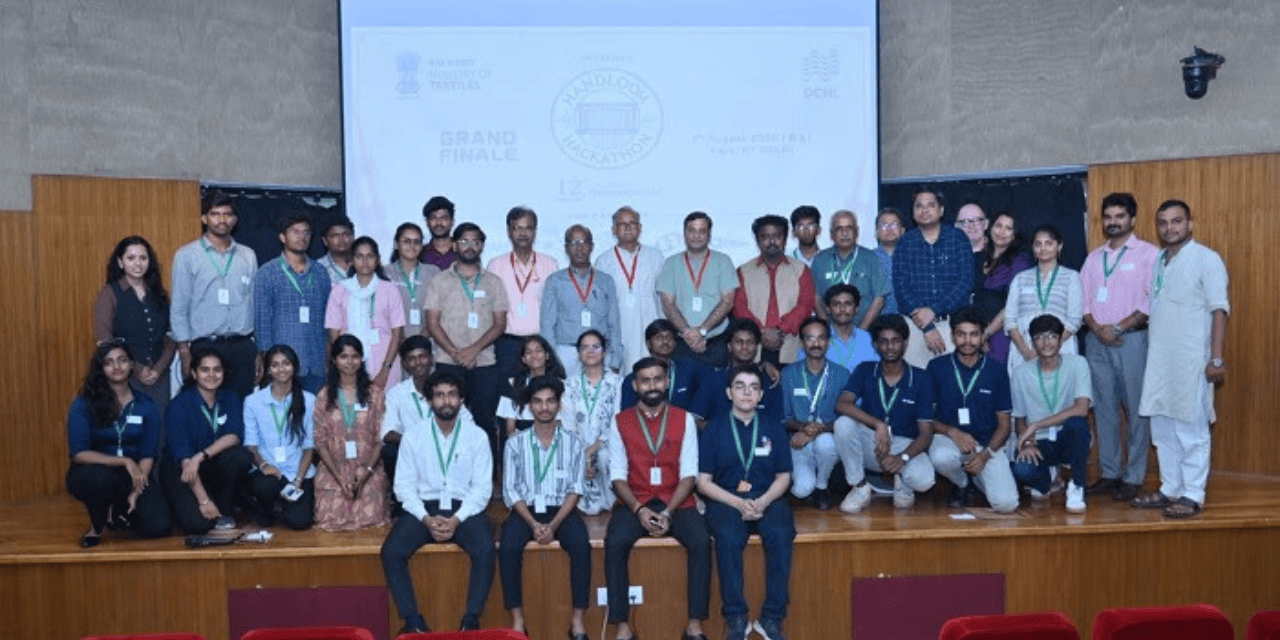
The Handloom Hackathon 2026, a nationwide innovation initiative led by the Office of the Development Commissioner for Handlooms under the Ministry of Textiles, has concluded with a Grand Finale at the Research and Innovation Park, IIT Delhi. The initiative brought together innovators, researchers, students, faculty members and handloom experts to develop technology-driven solutions for some of the sector’s most pressing challenges.
Conceptualised by ThinkStartup, the hackathon attracted more than 2,500 participants, with 280 finalists representing the top 100 shortlisted teams presenting their solutions at the Grand Finale. The innovations focused on modernising India’s handloom ecosystem while preserving traditional craftsmanship and improving the livelihoods of weavers.
Technology and Innovation at the Heart of Handloom Modernisation
The Handloom Hackathon 2026 provided a national platform for developing practical solutions across areas including loom modernisation, design innovation, sustainability, market access and weaver livelihoods.
The participating teams demonstrated how emerging technologies and entrepreneurial approaches can complement India’s rich handloom heritage. Their solutions aimed to improve productivity, strengthen market connections, reduce environmental impact and create new opportunities for India’s weaver communities.
Development Commissioner (Handlooms) Dr. M. Beena, IAS, highlighted the complementary relationship between India’s traditional craftsmanship and modern technology.
“We must combine innovation with traditional craftsmanship to improve the lives of weavers,” Dr. Beena stated.
She also highlighted the inherent sustainability and circularity of the handloom sector, while stressing the need for technological advancement in loom processes, design development and modern marketing. Dr. Beena further spotlighted the Indian Handmade Portal, an e-commerce platform designed to enable weavers to reach global customers without intermediaries.
Four Winners Recognised Across Key Handloom Challenges
The hackathon featured problem statements across four major thematic categories, with innovative solutions selected for their potential to address real-world challenges in India’s handloom sector.
VIZHI – AI-Powered Trend Forecasting App
VIZHI, developed by Madeshwaraboobalan V and Srinidhi B from IIHT Salem, emerged as the winner in the Weaver Livelihoods & Financial Inclusion category.
The AI-powered platform uses market trend forecasting to help weavers anticipate demand patterns and make better-informed production decisions. By providing insights into consumer and market trends, the solution aims to contribute to greater income stability for weaver communities.
Sutradhar – Connecting Weavers with Digital Markets
In the Market Access & Digital Integration category, Sutradhar, developed by Atharv Sanjeev Kumar and Gurkirat Singh from IIT Madras, secured the winning position.
The platform seeks to bridge the gap between rural weavers and digital marketplaces by facilitating direct access to global buyers. Its approach is designed to reduce dependence on supply-chain intermediaries and enable weavers to capture a greater share of the value generated from their products.
Savinya – Advancing Circularity in Handloom
Savinya, developed by Naveen Goyal, Mahak Goyal and Ritu Devi from Savinya Studio, won the Sustainability & Environmental Impact category.
The solution integrates sustainability across the handloom production cycle and explores circular economy models aimed at reducing waste and improving resource efficiency. It reflects the growing importance of environmentally responsible practices in the future development of the handloom industry.
Weaver Mithra Back Support System
The Innovation in Design & Operations category was won by the Weaver Mithra Back Support System, developed by Sriram Vaggu and Adigoppula Vishal from KLB IIHT Hyderabad.
The solution addresses occupational health challenges faced by weavers by providing ergonomic back support. The innovation is intended to improve comfort and enable weavers to work for longer, more productive periods.
IIT Delhi to Establish Centre of Excellence for Handloom Technology
The hackathon also highlighted the growing role of institutional collaboration in advancing handloom technology.
Dr. Deepti Gupta, Head of the Department of Textile and Fibre Engineering at IIT Delhi, announced the proposed Centre of Excellence for Handloom Technology at IIT Delhi, which is expected to be inaugurated in collaboration with the Ministry of Textiles.
The proposed centre is expected to focus on integrating technology with handloom production, improving standardisation and productivity while retaining the distinctive characteristics of handcrafted textiles.
Industry and Innovation Leaders Highlight the Potential of Handloom Technology
Sanjeeva Shivesh, Co-founder of ThinkStartup and Program Director of the Handloom Hackathon 2026 Organising Committee, congratulated the finalist teams and highlighted the broader social and economic potential of the initiative.
“This hackathon is a milestone in creating meaningful social and economic impact for India’s weavers. The winning solutions exemplify how innovation can preserve heritage while driving progress.”
He also connected the initiative with ThinkStartup’s Youth Ideathon, which encourages young students to develop ideas addressing real-world challenges.
The hackathon’s jury and ecosystem partners also emphasised the importance of innovation, design, intellectual property, digital market access and incubation in shaping the future of the sector.
Dr. Sanjay Gupta, Vice Chancellor, World University of Design, noted that handloom should be viewed not only as a heritage sector but also as a source of innovation, with emerging technologies and design thinking creating opportunities for younger generations to reinterpret traditional textiles for contemporary markets.
CV Raghu, President & Founder, General Counsel’s Association of India, highlighted the importance of intellectual property, design ownership and geographical indications as the sector becomes increasingly technology-driven.
Sanchit Govil, Co-founder, Lal10, emphasised the potential of digital platforms to connect rural artisans directly with domestic and international markets, while Vanita Vasudeva, Startup Portfolio Management, FITT, IIT Delhi, highlighted the importance of incubation, mentorship and market validation in taking promising prototypes beyond the hackathon stage.
From Innovation to Market Implementation
A key outcome of the Handloom Hackathon 2026 is the Ministry of Textiles’ commitment to providing one-year incubation support for investor-ready participants.
The initiative is intended to help promising solutions move beyond the competition environment towards real-world implementation and commercial viability. By connecting innovators with incubation and market opportunities, the programme aims to create a stronger pathway from ideation and prototyping to scalable solutions for the handloom sector.
The successful conclusion of Handloom Hackathon 2026 signals a growing focus on combining traditional handloom knowledge with technology, sustainability, digital commerce and entrepreneurship.
As India’s handloom industry seeks to strengthen its competitiveness in domestic and international markets, initiatives such as the hackathon could play an important role in developing solutions that improve productivity, expand market access and create tangible benefits for weaver communities while preserving the country’s distinctive textile heritage.