
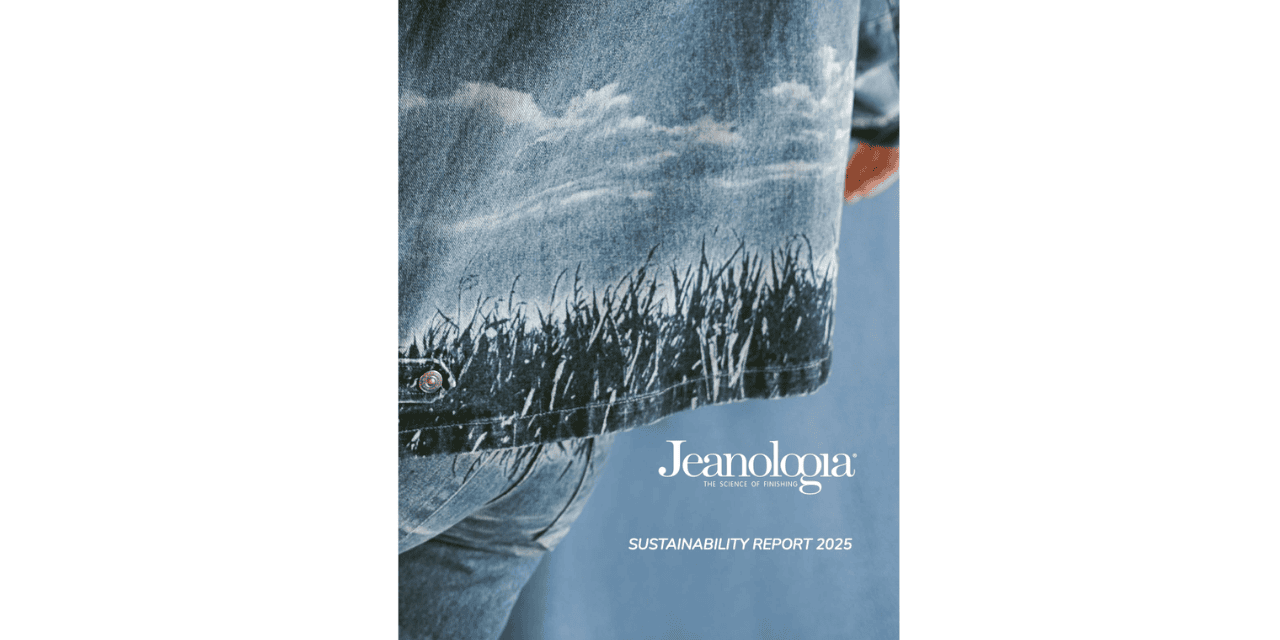
Jeanologia has released its Sustainability Report 2025. The report covers its environmental and social progress during the year.
It also highlights the impact of Jeanologia technologies across the textile industry.
Lower Carbon Emissions
Jeanologia reduced its own carbon footprint by 13.64% in 2025. Its carbon footprint fell from 895.79 tonnes to 773.57 tonnes of CO₂ equivalent.
At the same time, its technologies helped reduce environmental impact at textile factories worldwide.
Their use prevented 21.52 million m³ of water from being polluted. They also helped prevent 103.53 million kg of CO₂ emissions. These figures compare the use of Jeanologia technologies with traditional textile finishing processes.
EU Taxonomy Results
Jeanologia also completed its first voluntary assessment under the EU Taxonomy. The results show that 96.37% of its turnover was linked to activities aligned with the framework. The figure for CapEx was 84.43%. OpEx linked to aligned activities stood at 34.96%.
These activities mainly support climate change mitigation and adaptation. They also support the move towards a circular economy.
Focus on Sustainability Measurement
Jeanologia has measured its sustainability progress for several years.
The company published its first Sustainability Report in 2017. It also introduced an Environmental Profit and Loss Account. This system helped measure water savings and CO₂ reductions from its technologies.
In 2019, Jeanologia created a cross-functional Sustainability Committee. Then, in 2022, it further developed its reporting process. The process follows United Nations principles and GRI Standards.
The 2025 report now sets new priorities. These include better emissions data and stronger measurement methods.
Jeanologia also aims to improve data quality and traceability. In addition, it plans to increase visibility across its value chain.
EIM Measures Textile Impact
Jeanologia also continues to develop EIM (Environmental Impact Measuring).
EIM measures the environmental impact of textile processes. It provides a common method for brands and manufacturers. In 2025, Jeanologia published its second EIM report.
The report used data from more than 100,000 real-world processes. It covered 359 manufacturers across more than 40 countries.
The data provides a broad view of environmental impact in the global denim industry.
Jeanologia plans to further develop EIM as an independent unit. It will also allocate more resources to its development.
Next Steps
The Sustainability Report 2025 outlines Jeanologia’s next priorities. The company will focus on better impact measurement. It will also work to reduce its operational footprint. Climate resilience and value chain visibility are other areas of focus.
Jeanologia said its approach brings together business, people and the planet. The company will continue to measure its impact and work towards further improvements.