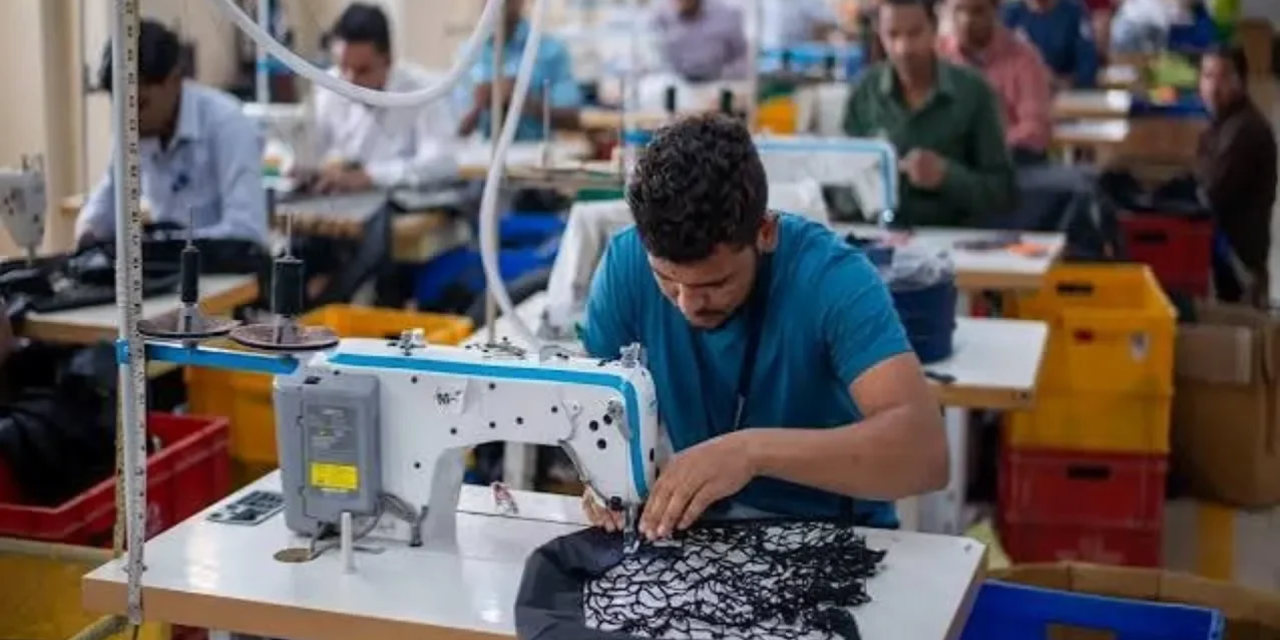
Khadi and Village Industries are supporting rural employment, women’s empowerment and sustainable production in India. The Khadi and Village Industries Commission (KVIC) is promoting traditional industries through skill development, financial assistance and improved market access.
According to Roop Rashi, Chief Executive Officer of KVIC, the sector supports rural enterprises while encouraging the use of natural fibres and resource-efficient production methods. Khadi also connects traditional craftsmanship with modern fashion and lifestyle products.
The sector is expanding into new product categories, including designer saris, denim, contemporary apparel and home textiles. The Centre of Excellence for Khadi at NIFT Delhi has developed 2,129 design collections across apparel and home-made products.
A KVIC evaluation study submitted in January 2026 by the Entrepreneurship Development Institute of India (EDII), Ahmedabad, reported that more than 75% of artisans across the assessed schemes experienced an increase in income following intervention. The study also identified improvements in year-round employment opportunities.
Women account for around 80% of approximately half a million Khadi artisans, according to the article. Their participation supports financial independence and strengthens the sector’s role in inclusive rural development.
KVIC is also working to improve production infrastructure, product traceability and market access. Modernisation of central sliver plants and initiatives to develop naturally coloured cotton are among the measures aimed at supporting more resource-efficient production.
With growing international interest in handmade and environmentally responsible products, Khadi and village industries have opportunities to expand their market presence. The sector combines traditional skills, rural livelihoods and sustainable production practices while contributing to India’s broader development goals.