
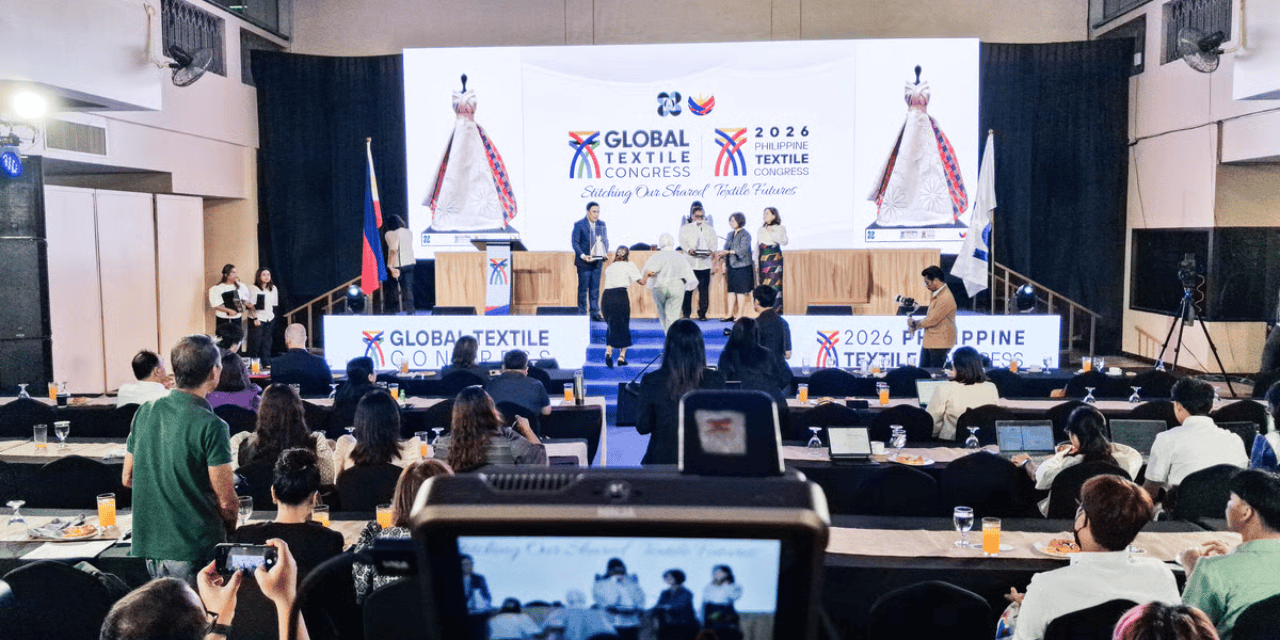
The Philippine Textile Congress 2026 has opened in Quezon City. The event is led by the Department of Science and Technology–Philippine Textile Research Institute (DOST-PTRI).
The event is being held with the first Global Textile Congress. It brings together textile researchers, experts and industry partners from the Philippines and other countries.
The main focus is on textile research, sustainability and innovation. The congress also looks at ways to strengthen the Philippine textile industry.
Global Textile Congress Connects Textile Experts
The Global Textile Congress is focused on research and development. It also aims to create stronger links between Philippine and international institutions.
DOST-PTRI Director Julius Leano Jr. said the event will help the Philippines learn from other countries.
Austria is one example. The Philippines is working with Austrian partners on textile circularity.
The Austrian model includes the collection of textile waste. It covers both consumer waste and industrial waste. The model also includes product labelling and material testing.
The Philippines hopes to learn from this approach. It also wants to work with the government and private sector to develop similar solutions.
Focus on Sustainable Textile Use
The congress also discussed changes in consumer behaviour.
Fast fashion has increased textile waste in many markets. As a result, the industry is looking at slower and more sustainable ways to produce and buy clothing.
The Austrian model can offer useful lessons. These lessons may help the Philippines build a stronger circular textile system.
This approach can support better waste collection. It can also encourage the reuse and recycling of textile materials.
Digital Product Passports Take Centre Stage
Digital product passports were another major topic at the event.
These passports can give buyers more information about textile products. They can also help track products across the supply chain.
The system is expected to become more important in global textile trade. By 2030, digital product passports are expected to play a bigger role in textile markets.
For Philippine textile companies, this could bring new opportunities.
A digital passport can show where a product was made. It can also provide details about the materials used.
Other information may include water use and carbon emissions. This data can help buyers check the environmental impact of a product.
Philippines Targets Global Textile Growth
The Philippine Textile Congress 2026 is bringing together government bodies, researchers and industry experts.
The event is also creating links with international partners. These links can support new research and textile technologies.
Sustainability is another key area. The industry is looking at better materials, cleaner production and improved waste management.
Digital traceability can also help Philippine textile products meet global market needs.
Overall, the congress shows the Philippines’ growing focus on textile innovation. It also highlights the need for sustainable production and better product information.
With stronger research and global partnerships, the country can build a more competitive textile industry.