
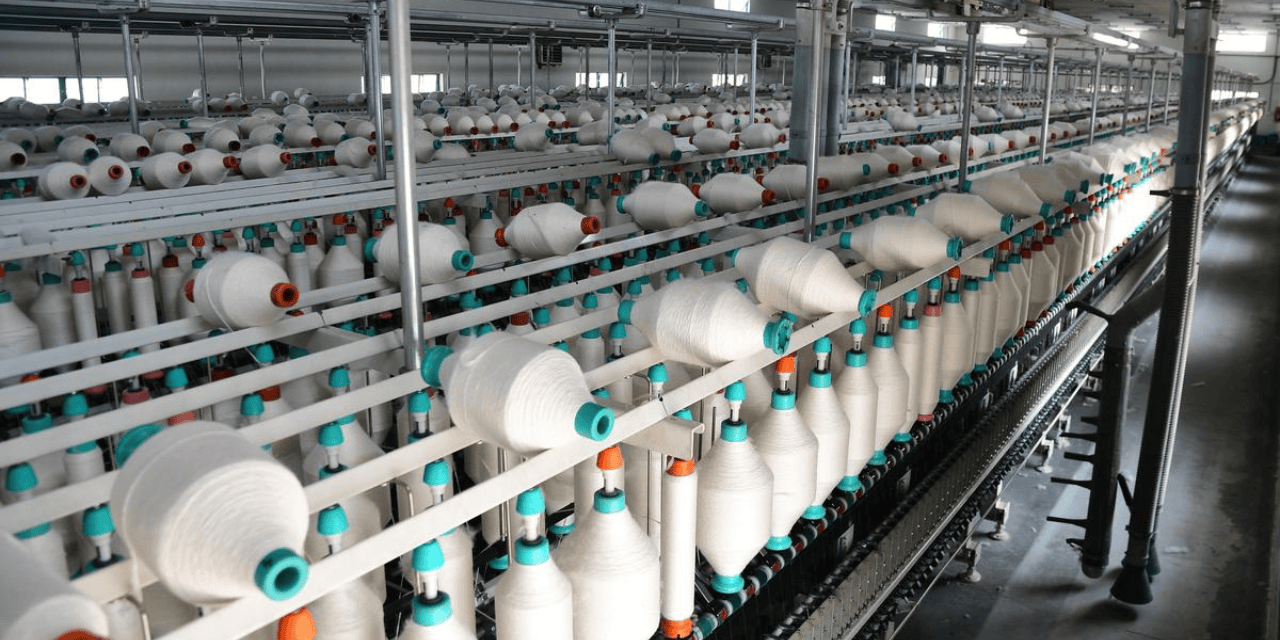
Textile mills in Tamil Nadu are investing in modernisation.
The move comes as yarn demand starts to improve.
Demand for cotton and blended yarn has picked up in recent months.
This recovery is giving mills more confidence to invest.
Textile Industry Sees Signs of Recovery
Tamil Nadu’s textile industry has faced a tough period since 2022.
Several mills shut down during this period.
Others reduced their production to manage rising costs.
Now, market conditions are showing signs of improvement.
Both export and domestic demand are getting better.
As a result, some mills have started investing again.
KPR Mills Plans ₹260 Crore Investment
KPR Mills is among the companies investing in its operations.
The company announced an investment of ₹260 crore.
The funds will support two spinning mills in Coimbatore district.
The mills are located at Karumathampatti.
The project will focus on modernisation and capacity expansion.
The upgraded units are expected to start operations later this financial year.
Other Textile Mills Also Expand
KPR Mills is not the only company making new investments.
The Pallava Group is also working on modernisation.
The group is based in Pallipalayam.
It plans to add more production capacity.
A medium-sized textile mill in Kannampalayam is also expanding.
The mill is sourcing second-hand machinery for the project.
This approach can help mills increase capacity at a lower cost.
Modern Machines Can Cut Costs
Modernisation can help textile mills improve their performance.
New machines can increase production.
They can also reduce manual work.
Automation can improve production speed and consistency.
It can also help mills control operating costs.
These benefits are important in a competitive yarn market.
Durai Palanisamy is the chairman of the Southern India Mills Association.
He said mills need to keep investing in their businesses.
He also highlighted the need for better productivity and automation.
Modern machines can also give mills a cost advantage.
Yarn Export Demand Improves
Export demand has improved in recent months.
Global demand for yarn is also picking up.
China is currently a major buyer of yarn.
The improvement in export orders is helping textile mills.
It is also encouraging mills to use their available funds.
Some companies are now using their liquidity for upgrades.
This could support further investment across the sector.
Domestic Demand Also Picks Up
The domestic textile market is also showing improvement.
However, mills continue to face some major challenges.
Cotton prices are one of the biggest concerns.
Higher cotton prices are increasing production costs.
They are also putting pressure on mill profits.
Rising Cotton Prices Create Pressure
Cotton is a key raw material for spinning mills.
Therefore, changes in cotton prices directly affect production costs.
Mill owners are closely watching the market.
They are concerned about the continued rise in cotton prices.
Higher raw material costs could reduce profit margins.
This may limit the benefits of stronger yarn demand.
Mills Look for Better Efficiency
The textile sector needs higher efficiency to remain competitive.
Modern machinery can help achieve this goal.
Automation can also reduce dependence on manual processes.
At the same time, capacity expansion can help mills meet new orders.
Therefore, investment is becoming an important part of the recovery.
Industry Confidence Begins to Return
The latest investments point to improving confidence in Tamil Nadu’s textile sector.
Mills are responding to better yarn demand.
They are also looking for ways to reduce production costs.
Modernisation can help them meet both goals.
The recovery is still facing challenges.
Cotton prices remain a key concern for the industry.
However, stronger demand could encourage more mills to invest.
Outlook for Tamil Nadu Textile Mills
Tamil Nadu remains an important textile manufacturing hub in India.
The state has a large base of spinning and textile mills.
The recent investments could support the sector’s next phase of growth.
More mills may consider modernisation if demand remains strong.
Automation could become an important part of this process.
Capacity expansion may also increase in the coming months.
For now, the industry is seeing cautious optimism.
Better yarn demand is giving mills a reason to invest again.