
The global textile coatings market is poised for steady expansion, with market size projected to grow from USD 7.1 billion in 2025 to USD 11.0 billion by 2034, registering a compound annual growth rate (CAGR) of 5.0% between 2026 and 2034, according to the latest Growth Market Report.
The market is being driven by increasing demand for advanced textile coating technologies across industries such as automotive, healthcare, construction, aerospace, defense and sportswear. Growing adoption of sustainable materials, functional fabrics and smart textile technologies is further accelerating innovation within the sector.
Functional Textiles Drive Market Growth
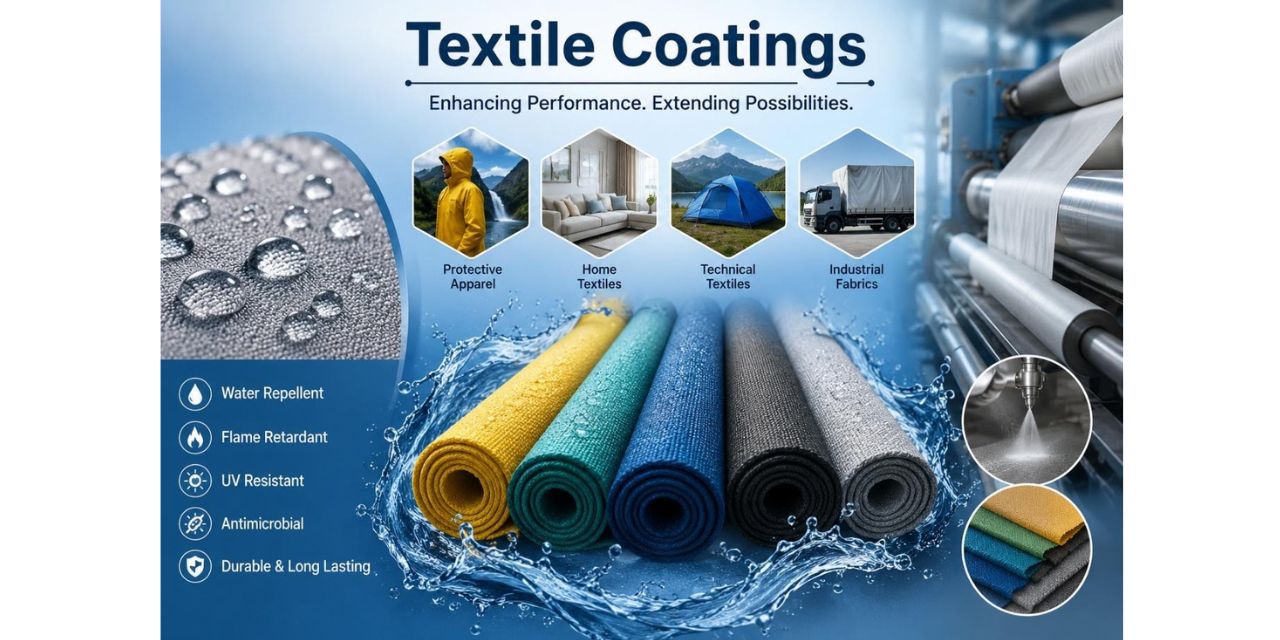
Textile coatings have evolved beyond improving the appearance of fabrics and now play a critical role in enhancing performance characteristics such as water resistance, flame retardancy, UV protection, antimicrobial properties, chemical resistance, abrasion resistance and breathability.
As industries increasingly demand durable, lightweight and multifunctional materials, coated textiles are becoming essential components in technical textiles, protective clothing, transportation, medical applications and architectural structures.
The emergence of smart textile coatings, capable of integrating sensors, conductivity and interactive functions into fabrics, is creating new opportunities for next-generation wearable technologies and intelligent textile solutions.
Rising Demand Across Key Industries
Growing investment in technical textiles remains one of the strongest growth drivers for the industry. Coated fabrics are widely used in medical implants, geotextiles, filtration systems, airbags, conveyor belts, agricultural textiles and industrial applications where enhanced mechanical performance is essential.
The automotive sector continues to generate significant demand for coated textiles used in vehicle seating, airbags, roof liners, insulation materials, door panels and convertible tops. Manufacturers increasingly prefer coated fabrics that combine durability with lightweight construction to improve vehicle efficiency and passenger comfort.
Healthcare applications are also expanding rapidly as hospitals and medical institutions seek antimicrobial, fluid-resistant and sterilizable textiles that improve hygiene and patient safety.
In construction, coated fabrics are widely used for tensile structures, roofing systems, weather-resistant membranes and architectural applications due to their durability, flexibility and weather resistance.
Protective Clothing and Smart Wearables Fuel Innovation
The increasing need for protective apparel across industrial, military, firefighting and healthcare sectors continues to support demand for advanced textile coatings that offer heat resistance, chemical protection and enhanced durability without compromising wearer comfort.
At the same time, the rapid growth of wearable electronics is opening new opportunities for conductive textile coatings capable of integrating biometric sensors, heating elements, energy harvesting systems and connected technologies into garments.
Polyurethane Leads Coating Technologies
Among coating materials, polyurethane (PU) continues to dominate owing to its flexibility, softness, breathability and abrasion resistance. It is widely used in outdoor apparel, sportswear, medical fabrics and protective garments.
Polyvinyl chloride (PVC) coatings remain popular in heavy-duty industrial applications such as tarpaulins, truck covers, tents and architectural membranes because of their excellent waterproofing and chemical resistance.
Meanwhile, silicone coatings are gaining traction in aerospace and medical applications due to their superior UV stability and temperature resistance, while acrylic coatings are widely used in home furnishings, awnings and decorative textiles.
Sustainability Reshapes the Industry
Environmental regulations and growing consumer awareness are encouraging manufacturers to transition from solvent-based coatings to water-based, bio-based and low-VOC alternatives.
Companies are investing heavily in sustainable innovations including fluorine-free water repellents, biodegradable coating materials, recyclable coated textiles, plant-derived polymers and circular manufacturing processes to reduce environmental impact while maintaining product performance.
These developments are helping manufacturers align with stricter global sustainability standards and evolving customer expectations.
Next-Generation Textile Technologies
The future of textile coatings lies in intelligent and multifunctional materials. Researchers are developing innovative coatings capable of delivering self-cleaning, self-healing, antiviral and air-purifying properties, alongside temperature regulation, moisture-responsive ventilation and integrated conductive electronics.
These advanced technologies are expected to transform sectors ranging from healthcare and defense to consumer electronics, infrastructure and smart wearables.
Challenges Remain
Despite positive growth prospects, the industry continues to face challenges including volatile raw material prices, stringent environmental regulations governing coating chemicals and technical difficulties associated with recycling coated textiles composed of multiple material layers.
Manufacturers are therefore focusing on cleaner chemistries and sustainable production methods to address these concerns while maintaining competitiveness.
Outlook
According to the Growth Market Report, the textile coatings industry is entering a new era where innovation, sustainability and digital technologies will define future growth. As demand increases for lighter, stronger and environmentally responsible materials, advanced textile coatings are expected to play a central role in enabling next-generation applications across healthcare, transportation, construction, consumer goods and smart textiles.
Manufacturers investing in sustainable coating technologies, advanced material science and scalable production capabilities are expected to be best positioned to capitalize on the growing global demand for high-value functional textiles.