
Automation and green investments drive growth in textile finishing technologies worldwide
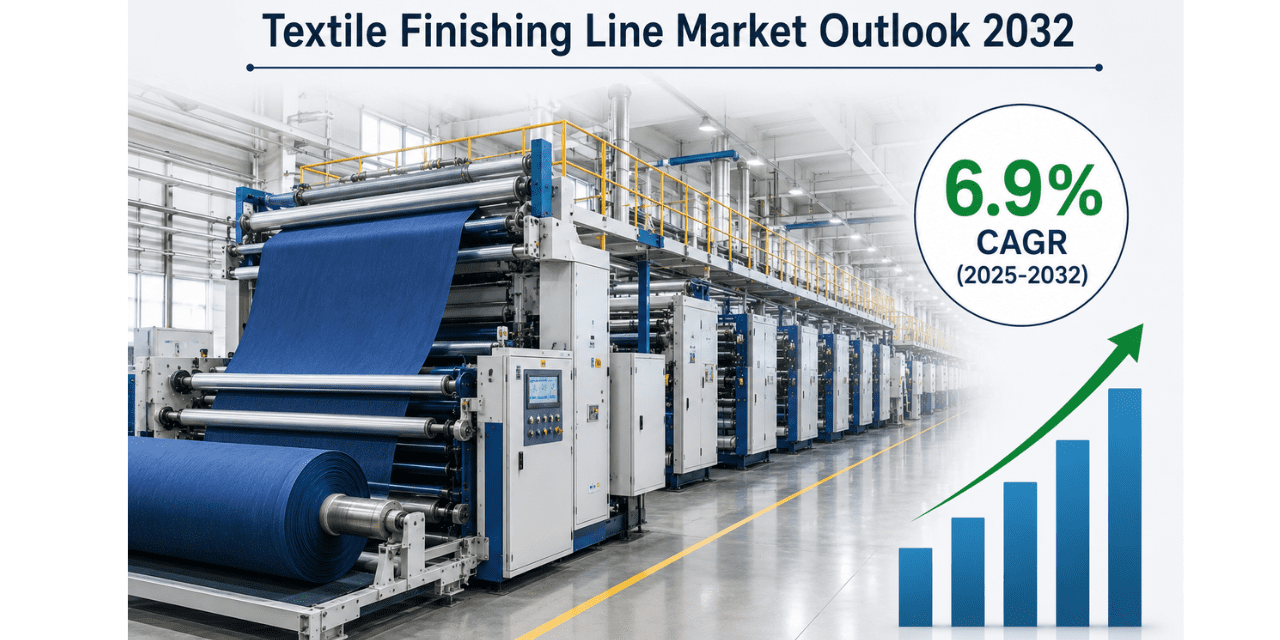
The global Textile Finishing Line industry is witnessing increased investments in automated dyeing, coating, printing, and finishing technologies as manufacturers modernise production operations. According to estimates highlighted by Marketintelo, the market was valued at nearly USD 11.2 billion in 2024 and is projected to reach USD 18.7 billion by 2032, growing at a CAGR of 6.9% during 2025–2032.
The industry processed more than 142 million metric tons of fabric globally in 2024, compared to 119 million metric tons in 2019, representing a 19.3% increase over five years. Demand for technical textiles, sustainable fabrics, and high-speed finishing systems continues to support investments across Asia-Pacific, Europe, and North America.
Market Growth and Industry Investments
The Textile Finishing Line sector recorded consistent annual growth following the pandemic recovery period. Market expansion reached 5.1% in 2021, followed by 5.8% in 2022. Revenue growth increased by 6.2% in 2023 and 6.7% in 2024, supported by demand from apparel, automotive textiles, and home furnishing applications.
The market was valued at USD 7.4 billion in 2016 and crossed USD 8.3 billion by 2018. In 2020, revenues reached USD 8.9 billion amid supply chain disruptions before recovering to USD 10.5 billion by 2023.
Governments worldwide allocated more than USD 5.4 billion toward green textile manufacturing initiatives between 2023 and 2025. The European Union alone dedicated approximately USD 1.3 billion to sustainable textile innovation programmes.
Regional Market Trends
Asia-Pacific accounted for 47.8% of the global market share in 2024, driven by textile manufacturing activities in China, India, Bangladesh, and Vietnam. The region generated nearly USD 5.35 billion in revenue and is forecast to exceed USD 9 billion by 2032.
China contributed around 38% of global textile production capacity in 2024, while India’s textile machinery investments crossed USD 4.8 billion. Bangladesh also recorded a 14.6% year-over-year increase in textile finishing exports.
Europe represented 22.6% of the market in 2024, with Germany, Italy, and Turkey accounting for more than 54% of regional machinery demand. Sustainable finishing systems adoption in Europe increased by 35% between 2021 and 2024.
North America held an 18.4% market share in 2024, supported by technical textile and medical fabric demand. The U.S. textile finishing equipment sector generated approximately USD 1.7 billion in annual revenue.
The Middle East & Africa market reached USD 780 million in 2024, while Latin America generated around USD 960 million, led by Brazil and Mexico’s apparel industries.
Technology and Sustainability Trends
Automation continues to reshape textile finishing operations globally. More than 62% of large-scale textile manufacturers integrated AI-enabled monitoring systems by 2024, compared to 29% in 2019.
Digital finishing technologies improved production efficiency by 27% and reduced defect rates by nearly 19%. Infrared drying systems lowered energy consumption by 24%, while low-liquor dyeing technologies reduced chemical usage by 30%.
Automated finishing systems adoption increased by 31% between 2020 and 2024, while smart Textile Finishing Line installations rose 28% year-over-year in 2024.
Energy-efficient systems reduced operational costs by an average of 18%, and water-saving finishing technologies lowered water consumption by 42% in modern production facilities.
Industry Outlook
The apparel segment remained the largest end-user in 2024, accounting for 52% of global demand. Home textiles represented 23%, industrial textiles 15%, and automotive textiles approximately 10%.
Capital expenditure by major textile manufacturers increased by nearly 17% during 2024 as companies modernised finishing operations. Advanced finishing plants are now capable of production speeds exceeding 120 meters per minute, compared to 78 meters per minute in systems installed before 2018.
By 2032, automated and sustainable finishing technologies are expected to account for more than 74% of global installations, while automation adoption is projected to surpass 80% worldwide.
Report Link:- https://marketintelo.com/report/textile-finishing-line-market