
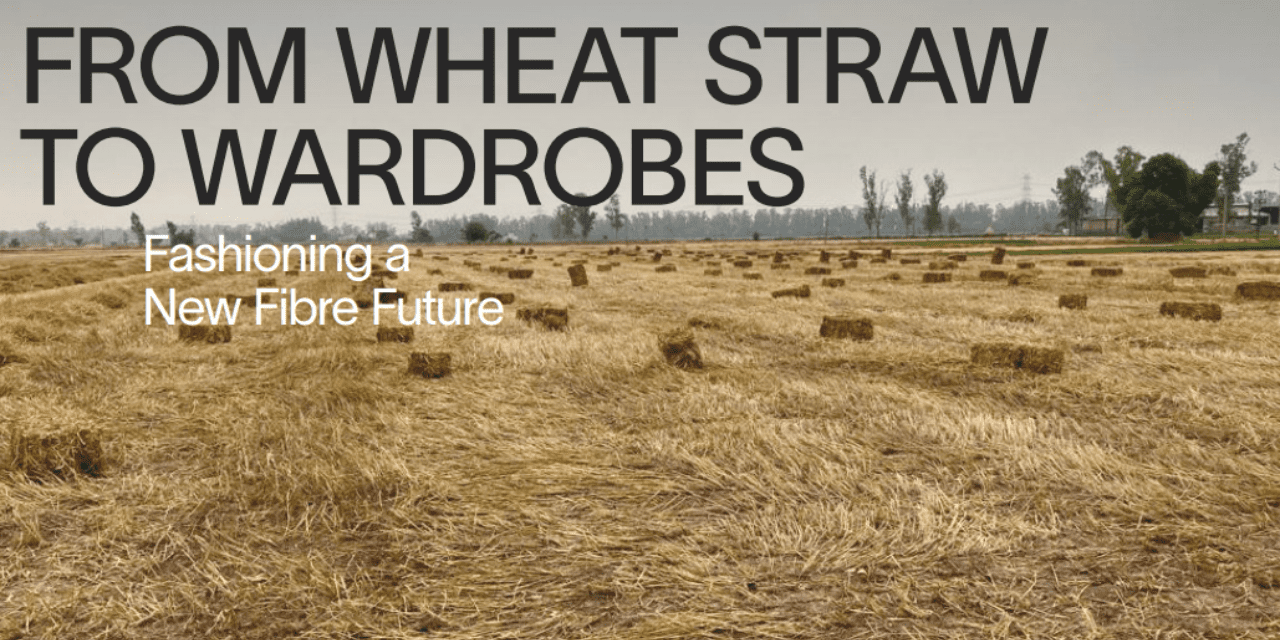
New report highlights potential of agricultural waste in viscose and lyocell production
A new report by Canopy has revealed that wheat straw could become a viable sustainable alternative to wood pulp in the production of viscose and lyocell fibres for the fashion industry.
The report, titled From Wheat Straw to Wardrobes: Fashioning a New Fibre Future, highlights findings from Project Latvus, a pilot initiative testing Indian wheat straw as a raw material for next-generation man-made cellulosic fibres (MMCFs).
According to the report, wheat straw pulp can successfully replace conventional wood-derived pulp while meeting technical, performance, and commercial standards across multiple textile and apparel applications.
Reducing Dependence on Forest Fibres
Wood-derived pulp is widely used in the production of MMCFs such as viscose and lyocell. However, the report noted that more than 300 million trees are cut down annually to produce these fibres, including trees from climate-critical and biodiversity-rich forests.
The project demonstrates how agricultural waste could help reduce the fashion industry’s dependence on forest resources while also supporting circular textile production systems.
Project Latvus Brings Industry Together
Project Latvus involved collaboration between several fashion and textile stakeholders, including Fashion for Good, H&M Group, Reformation, C&A, along with supply chain and manufacturing partners including Chempolis, TITK, Inovafil, Yee Chain, Shahi, Filpucci, DBL, Textile Genesis, and A2P Energy.
The initiative focused on integrating the supply chain from farm to garment to identify and address challenges involved in scaling alternative fibre production.
India Positioned as Key Market
The report highlighted India’s strong potential to become a global hub for next-generation MMCF production due to its large agricultural residue availability and growing circular textile infrastructure.
According to estimates cited in the report, more than 90 million tonnes of crop residue are burned annually in India. Redirecting this agricultural waste into textile fibre production could help reduce air pollution caused by crop burning while also creating additional income opportunities for rural farming communities.
The report also noted that crop burning contributes significantly to seasonal PM2.5 air pollution levels in Northern India.
Industry Push for Commercial Scale
Nicole Rycroft said:
“Project Latvus shows that the future of fibre is already here. While continued scale-up is needed to optimize efficiency and close the price difference, the direction is clear — Next Gen MMCFs are ready for the next stage of commercial adoption.”
Canopy is urging fashion brands to support the commercial scale-up of next-generation MMCFs made from alternative feedstocks, arguing that pooled industry demand can help these materials achieve price parity faster.


